
English 


Views: 0 Author: Site Editor Publish Time: 2026-02-18 Origin: Site


Understanding the various powder filling machine types is crucial for businesses looking to streamline their production processes and ensure high-quality packaging. The right powder filling machine not only improves efficiency but also helps maintain consistency and accuracy across different products. Whether you're in the food, pharmaceutical, or chemical industries, choosing the proper filling equipment can make a significant difference in reducing waste, enhancing productivity, and optimizing packaging costs. At Mooha, we provide a range of powder filling machines, including semi automatic powder filling machines and fully automated solutions, tailored to meet the needs of different industries. In this article, we will explore the different powder filling machine types and provide insights on when each type is best used to improve your production line.
There are several types of powder filling machines, each designed to address specific production needs. Knowing the differences between these machines helps businesses select the right equipment based on their production scale, product type, and specific needs. Below are the most commonly used types of powder filling machines across various industries:
Powder auger fillers are among the most commonly used filling machines for handling fine powders and materials that have poor flow characteristics. These machines use a rotating auger screw to transport powder from the hopper to the filling nozzle. The auger screw ensures that each dose is precise, making these machines highly effective in maintaining consistency and accuracy in powder dispensing.
Auger powder filling machines are ideal for fine powders such as flour, coffee powder, and pharmaceuticals. They are equipped to handle powders that might clump, flow inconsistently, or generate dust, making them highly suitable for industries where powder quality and hygiene are paramount. The auger mechanism minimizes spillage and waste, enhancing the overall efficiency of the filling process.
Volumetric powder fillers work by using a measuring chamber to collect a specific volume of powder, which is then transferred to the container. These machines are designed to provide faster filling speeds compared to auger fillers and are ideal for free-flowing powders like sugar, powdered drinks, and other granular products.
While volumetric fillers are faster than auger fillers, they are less precise when dealing with fine powders that have inconsistent flow properties. These fillers are perfect for industries where high-speed filling is required, and accuracy is less critical, such as in large-scale food production or packaging of powdered non-food products.
Vacuum powder fillers use a vacuum system to transport powders from the hopper into containers. This method is particularly useful for dispensing ultra-fine powders or materials that are highly dust-sensitive. The vacuum system prevents dust from escaping into the air, making it ideal for pharmaceutical applications or other industries where dust control is critical.
Vacuum powder filling machines are highly effective in minimizing the mess and ensuring a clean, controlled filling environment. They are also better suited for powders with a tendency to form airborne particles that could contaminate the surrounding environment.
Auger Powder Fillers: Best for handling fine powders and granules with poor flow characteristics. They ensure precision and reduce dust generation.
Volumetric Fillers: Best for fast, high-volume production runs with free-flowing powders that don’t require precise measurements.
Vacuum Fillers: Best for ultra-fine powders and applications where dust control is crucial, such as in pharmaceuticals.
Powder auger fillers are often regarded as the most versatile powder filling machines due to their ability to handle a wide range of powders, from free-flowing to non-free-flowing materials. The unique feature of these machines is the auger screw, which rotates to move the powder from the hopper into the container.
Tabletop Models: Tabletop powder auger fillers are compact and ideal for small-scale operations. These machines are typically used for small batch runs or for laboratory settings where precision is essential. Despite their small size, they offer the same high accuracy as larger systems.
Semi-Automatic Models: Semi-automatic powder auger fillers require operators to manually place containers under the filling nozzle. Once the container is in place, the machine automatically dispenses the powder. These machines are ideal for medium-scale operations where flexibility is required, and they can be used to fill a variety of containers with different powder types.
Automatic Line Integrators: Fully automated powder auger fillers are integrated into large-scale production lines. These machines require little to no human intervention, making them ideal for high-volume production. Automatic systems are highly efficient and are designed to be integrated with other packaging equipment, such as capping and labeling machines, to provide a complete automated packaging solution.
High Precision: The auger screw ensures that powders are dispensed in precise, controlled amounts, reducing wastage and improving product consistency.
Minimal Dust: Auger fillers minimize dust generation, making them suitable for industries where cleanliness and hygiene are essential.
Versatility: Auger fillers can handle a wide range of powder types, including fine powders, granular materials, and powders with varying flow characteristics.
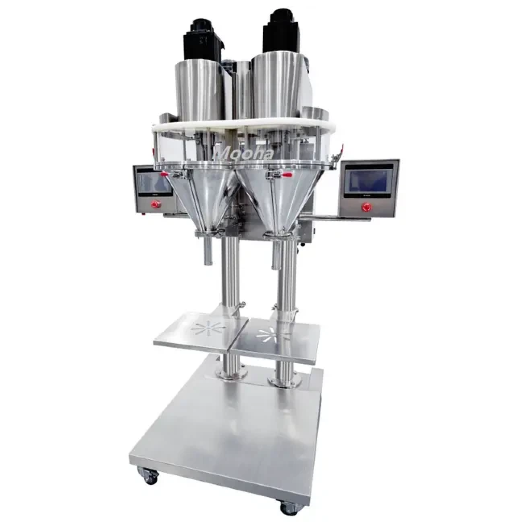
Semi-automatic powder filling machines are an excellent choice for businesses that need flexibility but do not require the speed and automation of fully automated systems. These machines are perfect for companies that deal with small to medium production runs, especially when different products or container sizes need to be filled. Here are some scenarios where semi-automatic powder filling machines excel:
Small Batches: For businesses that do not have high-volume needs, semi-automatic powder fillers offer a cost-effective solution. Operators can manually place containers and adjust the machine settings as needed, making these machines ideal for small-scale operations.
Budget-Sensitive Businesses: Semi-automatic machines are more affordable than fully automatic systems. They provide a balance between manual labor and automation, which can help businesses save on upfront costs without sacrificing performance.
Flexible Production Runs: Businesses that need to produce different types of products in varying quantities will find semi-automatic machines ideal. These machines are easy to adjust and set up for different powders and container sizes, making them a versatile option for companies with fluctuating production needs.
Choosing the right powder filling machine type for your business depends on your specific production needs. Here's a quick comparison of the three most common types of powder filling machines to help you make an informed decision:
Machine Type | Typical Use Case | Speed | Precision | Best Product Fit |
Auger Filler | Powders & granules | Medium-High | High | Fine powders |
Volumetric Filler | Simpler powder runs | Low-Medium | Medium | Free-flow powders |
Vacuum Filler | Ultra-fine powders | Medium | High | Dust-sensitive applications |
Some industries require not only powder filling but also integration with other processes like capping or sealing. Powder vial filling capping machines are a perfect example of this integration. These machines fill vials with powder and immediately seal them, ensuring that the product remains secure during transport and storage. This integration reduces the need for separate capping equipment, improving efficiency and reducing the risk of contamination.
These machines are particularly beneficial for industries like pharmaceuticals, where maintaining product integrity and ensuring sterility are essential. They allow for faster production times, fewer manual handling steps, and greater consistency across the entire packaging process.
For larger businesses or high-volume production lines, integrating powder filling machines into an automated packaging line can provide several advantages. Automated lines allow for faster production, increased efficiency, and improved product consistency. By combining powder filling with capping, labeling, and sealing, businesses can streamline their entire packaging process.
Some of the key benefits of integrating filling machines into a packaging line include:
Increased Efficiency: Automated systems reduce the need for manual labor and can operate around the clock, resulting in higher throughput.
Reduced Labor Costs: With fewer manual steps, businesses can cut down on labor costs while improving overall efficiency.
Consistency and Quality Control: Automated systems ensure that every product is filled and sealed to the same standards, maintaining quality and minimizing errors.
In conclusion, choosing the right powder filling machine types is essential for businesses involved in powder-based products. Whether you're handling fine powders, free-flowing materials, or ultra-fine substances, there is a machine that fits your needs. By selecting the appropriate powder filling machine, businesses can enhance their production processes, improve accuracy, and reduce waste. Mooha’s range of powder filling machines offers versatile solutions for businesses across various industries. To learn more about how Mooha can improve your powder packaging processes, contact us today!
1. What are the main types of powder filling machines?
The main types of powder filling machines are auger fillers, volumetric fillers, and vacuum fillers, each designed for specific powder types and production needs.
2. When is a semi-automatic powder filling machine ideal?
Semi-automatic machines are best for small to medium batch operations, especially when flexibility and lower upfront costs are needed.
3. What is the difference between auger fillers and volumetric fillers?
Auger fillers provide higher precision and are ideal for fine powders, while volumetric fillers are faster and better suited for free-flowing powders.
4. Why is it important to integrate filling machines into packaging lines?
Integration increases production efficiency, reduces manual labor, and ensures consistent packaging, improving overall productivity and product quality.

