
English 


Views: 0 Author: Site Editor Publish Time: 2026-03-06 Origin: Site


“How many vials per minute do I actually need?” That is usually the first serious question buyers ask when evaluating a vial filling machine. Speed sounds simple, but real production output depends on far more than motor power or headline numbers in a catalog. Filling method, number of heads, vial handling stability, product viscosity, stoppering, and capping all influence how fast a line can truly run. This article explains what machine speed really means, what ranges are realistic in the market, and why the right balance between throughput and accuracy delivers better long-term results than chasing the highest possible number.
When manufacturers publish speed data, they often refer to bottles per minute under specific conditions. However, buyers must distinguish between theoretical filling speed and actual finished output.
Filling speed may describe how quickly liquid is dispensed into empty vials. Finished output, on the other hand, refers to fully filled, stoppered, and capped vials ready for packaging. If a machine fills quickly but the capping station operates more slowly, overall production speed is limited by the slower stage.
For this reason, a vial filling capping machine should be evaluated based on total line performance rather than isolated filling capacity. A balanced system that completes every stage at a consistent rate usually delivers more stable output than a high-speed filler connected to slower downstream equipment.
In an integrated system, several stages operate in sequence: vial feeding, positioning, filling, stoppering, capping, and discharge. The slowest of these stations determines the final production rate.
For example, if filling takes 0.5 seconds per vial but stoppering requires 0.8 seconds, the line speed is effectively controlled by the stoppering stage. Increasing motor speed in the filling unit will not raise total output unless other stages are upgraded accordingly.
Understanding this concept prevents unrealistic expectations. True throughput comes from system coordination, not from pushing a single component to its limit.
Speed ranges vary depending on machine configuration and automation level. Buyers generally encounter three broad categories.
Compact or semi-automatic machines are often used for laboratory environments, pilot production, or small-scale commercial runs. These systems may operate at relatively modest speeds, focusing on flexibility and accuracy rather than high-volume throughput.
Such setups are ideal when frequent changeovers are required or when product testing is ongoing. Stability and ease of adjustment matter more than raw output numbers.
Many growing brands require consistent daily production without investing in extremely large pharmaceutical lines. Mid-range automatic systems typically provide balanced speed suitable for ongoing commercial packaging.
These machines can deliver dozens of vials per minute under stable conditions. They are often designed as integrated units combining filling and capping, making them efficient for small to medium-scale operations.
Shanghai Mooha’s small-volume liquid packaging systems are positioned in this range for many applications. By combining precise dosing with automated closure handling, the output remains consistent without sacrificing product protection.
In larger industrial settings, fully automated lines may reach significantly higher speeds. Some pharmaceutical systems are engineered to exceed one hundred vials per minute, depending on fill volume and configuration.
However, higher speed typically requires more complex design, including multiple filling heads, advanced indexing systems, and synchronized capping mechanisms. These systems demand careful engineering to maintain accuracy at increased throughput.
Speed must always be considered alongside product characteristics. A machine capable of very high speed with water-like liquids may operate more slowly when filling thicker solutions or delicate formulations.
Increasing the number of filling heads can raise output because multiple vials are filled simultaneously. For example, a two-head configuration may double filling capacity compared to a single-head design under ideal conditions.
However, output does not always increase proportionally. If feeding, stoppering, or capping stages remain unchanged, the benefit of additional heads may be limited. Effective speed improvement requires coordinated system design.
Liquid properties strongly influence speed. Thin, free-flowing liquids can be dispensed quickly with minimal resistance. Thicker liquids require slower dosing to prevent overflow or inconsistent fill levels.
Foaming products may also demand reduced filling speed to maintain accuracy. For applications such as an e-liquid vial filling machine, flow behavior must be tested to ensure stable performance at target speeds.
Machines designed for versatility often allow adjustment of filling speed and pump parameters. This flexibility helps maintain consistency across different product types.
Smaller vials sometimes require more precise nozzle positioning, especially when openings are narrow. High-precision small-dose fills may be slower than larger fills where tolerance ranges are wider.
Conversely, larger fill volumes require more dispensing time per cycle. Therefore, production speed is influenced not only by vial size but also by the amount of product inside each container.
Stoppering and capping stages can significantly influence total output. Simple screw caps may allow faster operation than more complex sealing systems.
If an inner stopper must be placed before outer capping, each additional step adds time to the cycle. For pharmaceutical-style configurations sometimes referred to as a penicillin filling machine, closure reliability is critical and may limit maximum speed to ensure consistent sealing.
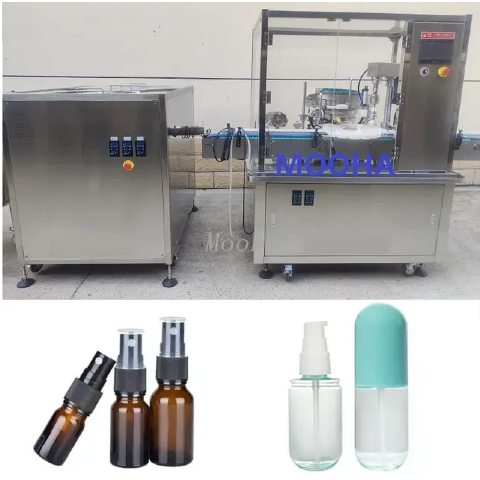
When machines operate near their maximum mechanical limits, small deviations can become more frequent. Overfilling, underfilling, splashing, or incomplete sealing may increase.
Rejected units, rework, and quality complaints reduce effective productivity. A slightly lower speed with higher consistency often delivers better overall efficiency.
Reagents, cosmetic samples, biotech fluids, and pharmaceutical liquids often require gentle handling. Controlled motion reduces turbulence and preserves product integrity.
For these applications, stable dosing and reliable sealing are more valuable than pushing for extreme throughput. A well-designed vial filling capping machine maintains consistent output without compromising quality.
If a machine frequently jams, requires constant adjustment, or suffers from unstable feeding, actual daily output may be lower than expected.
A stable system that runs slightly slower but with fewer interruptions can outperform a faster line plagued by downtime. Long-term productivity depends on reliability as much as mechanical speed.
Begin by calculating how many finished vials are required per shift or per day. Divide this number by available production hours to estimate the required output per minute.
This practical calculation provides a realistic target rather than relying solely on manufacturer claims.
Not all production time is active filling time. Changeovers between different vial sizes, cleaning procedures, and routine inspections reduce effective operating hours.
If frequent SKU changes are expected, selecting a machine with convenient adjustments and quick parameter switching helps maintain productivity.
Businesses often expand over time. Choosing a system that operates comfortably at current demand while offering some additional capacity supports future growth.
Shanghai Mooha emphasizes adjustable speed settings based on vial size, product viscosity, and production targets. This approach provides flexibility without forcing buyers to invest in unnecessarily oversized equipment.
Small containers, especially those containing leak-sensitive liquids, require stable dosing and secure closure. Excessively high speed may increase the risk of splashing or incomplete sealing.
An e-liquid vial filling machine configuration focuses on maintaining consistent fill levels while ensuring tight capping. Moderate, well-controlled speed often produces better finished results.
When filling and capping are combined in one coordinated system, output becomes more predictable. Vials move smoothly from one stage to the next without excessive manual handling.
Integrated design reduces alignment errors and supports consistent daily production. Mooha’s approach integrates filling and closure into a streamlined process, supporting efficiency for small-volume packaging lines.
Factor | How It Affects Speed | What Buyers Should Watch |
Filling heads | More heads can raise output | Balance speed with accuracy |
Product viscosity | Thicker liquids may fill slower | Confirm product testing |
Vial size | Smaller or unstable vials may need tighter handling | Check changeover ease |
Stoppering/capping | Added steps can reduce net throughput | Review full-line speed |
Automation level | Higher automation can improve consistency | Match capacity to labor |
Changeover frequency | Frequent SKU changes reduce effective output | Multi-format flexibility matters |
This overview highlights that speed depends on coordinated system performance rather than a single specification.
Shanghai Mooha integrates research, production, and sales of filling and packaging machinery. Rather than promoting extreme headline speeds, Mooha focuses on matching output to real production conditions.
Adjustable parameters allow customers to set appropriate speed levels according to vial size, liquid characteristics, and closure requirements. This builds long-term trust and supports stable operation.
Mooha’s strength lies in precise small-volume liquid packaging. For applications requiring 10 to 100 ml filling, integrated design ensures coordinated movement between filling and capping stages.
By prioritizing consistency and system balance, Mooha’s equipment delivers dependable throughput suitable for pharmaceutical, cosmetic, biotech, and specialty chemical sectors.
The “right” speed for a vial filling system is not the highest possible number but the rate that maintains filling accuracy, secure sealing, and stable daily output. Real productivity comes from balanced design, reliable coordination between stages, and equipment tailored to specific product characteristics. If you are evaluating capacity for small-volume liquid packaging, contact Mooha to discuss how a customized integrated solution can support your production goals while protecting product quality.
Production speed varies depending on configuration, number of filling heads, and product type. Systems can range from lower speeds for small-batch work to higher outputs for automated commercial lines.
Not always. Additional heads increase filling capacity, but overall speed is limited by other stages such as stoppering and capping.
Higher speed is beneficial only if accuracy and sealing quality remain stable. For small-format liquids, controlled speed often delivers better consistency.
Consistency, minimal downtime, and reliable sealing are often more important than peak speed. Balanced system performance ensures better real-world productivity.

