
English 


Views: 0 Author: Site Editor Publish Time: 2026-06-27 Origin: Site


Selecting the wrong equipment often leads to disastrous production bottlenecks, inconsistent fill volumes, and excessive pump wear. Facility managers frequently face unexpected downtimes when they deploy mismatched hardware for their specific fluid dynamic profiles. Liquid viscosity dictates how freely a product flows through pipes and nozzles. This physical property acts as the single most critical variable when selecting reliable production equipment. Misjudging it guarantees operational failures.
We designed this guide to provide a robust technical framework for evaluating different mechanisms. You will learn how to align machine specifications directly with your daily production goals. We will explore the vital differences between gravity-fed systems and heavy-duty piston configurations.
You will understand exactly how to match your fluid characteristics to the right technology. This ensures smooth operations and prevents costly integration mistakes. Every production line requires an optimized approach tailored to its unique physical demands.
Viscosity is measured in Centipoise (cps); understanding your product's cps rating is the mandatory first step in procurement.
Gravity and overflow machines are optimized for thin, free-flowing liquids (e.g., water, spirits).
Piston and positive displacement pump machines are required for high-viscosity or particulate-heavy liquids (e.g., honey, gels).
Attempting to run viscous products through a thin liquid filler causes pump burnout, while running thin liquids through a viscous filler often results in costly over-dispensing.
Multi-product facilities must prioritize changeover speed and CIP (Clean-In-Place) capabilities when evaluating machines.
Every liquid filling machine relies on the fundamental principles of fluid dynamics. Viscosity measures a fluid's internal resistance to flow. Industry professionals quantify this resistance using the Centipoise (cps) scale. A higher cps rating indicates a thicker liquid. Determining your exact cps baseline eliminates guesswork during equipment selection.
We can categorize industrial liquids into three main viscosity brackets. Thin liquids range from 1 to 100 cps. This category includes water, light oils, and alcohol. Medium liquids fall between 100 and 3,000 cps. Syrups and light lotions fit this profile. Thick products exceed 3,000 cps and can reach 50,000 cps or more. Honey, peanut butter, and heavy pastes dominate this dense category.
| Viscosity Category | Centipoise (cps) Range | Common Product Examples | Flow Behavior |
|---|---|---|---|
| Thin / Free-Flowing | 1 - 100 cps | Water, Spirits, Solvents | Flows rapidly, highly reactive to gravity. |
| Medium / Semi-Viscous | 100 - 3,000 cps | Syrups, Light Lotions, Sauces | Flows steadily, requires slight mechanical push. |
| Thick / Highly Viscous | 3,000 - 50,000+ cps | Honey, Heavy Creams, Pastes | Resists flow, requires powerful extrusion. |
Temperature variations dramatically alter these physical properties during a production run. Cold environments thicken liquids rapidly. This change demands strict environmental controls inside your facility. Many operators pre-heat dense products to temporarily lower their viscosity. Heating improves flow rates and protects machinery from unnecessary strain.
Ignoring viscosity carries severe business risks. Feeding a thick gel into an underpowered machine decreases cycles per minute (CPM). Pumps overexert themselves trying to move the dense material. This exertion often causes cavitation. Cavitation occurs when a pump pulls fluid faster than it can flow, creating destructive vacuum bubbles. Conversely, moving thin liquids improperly causes severe aeration. This aeration introduces foam, leading to rejected bottles and massive product waste.
Thin products require delicate handling and specialized valve systems. Gravity fillers offer a highly efficient solution for these fluids. They position a bulk supply tank directly above the filling heads. Time-based valves open for precise durations. Gravity naturally pulls the liquid down into the waiting containers. The steady flow ensures reliable volume dispensing.
Overflow fillers utilize a completely different approach. They employ a closed-loop return system. The nozzle dives into the bottle and seals the opening. Liquid flows in until it reaches a specific height. Excess fluid spills over through a return port back into the main reservoir. This mechanism creates a consistent cosmetic fill line. Retail brands heavily favor this fill-to-level approach for clear glass packaging.
These machines excel in specific industrial applications. They handle uncarbonated beverages, clear chemicals, and household solvents perfectly. A high-speed water bottling machine relies heavily on gravity or overflow mechanisms. Such systems maintain strict sanitation standards while achieving massive daily throughput.
Gravity and overflow systems provide numerous operational advantages. They feature simple mechanical designs. This simplicity translates into easy maintenance and fewer moving parts. Operators can clean them quickly between batches. They maintain extreme accuracy because thin fluid dynamics remain highly predictable under consistent pressure.
However, these mechanisms face severe operational limitations. They completely fail when introduced to thick products. Dense pastes block the narrow pathways. Gravity cannot generate enough force to push heavy creams through the valves. Additionally, thin liquids prone to foaming require special adaptations. Operators must install diving nozzles to fill from the bottom up. Bottom-up filling prevents agitation and keeps foam levels under control.
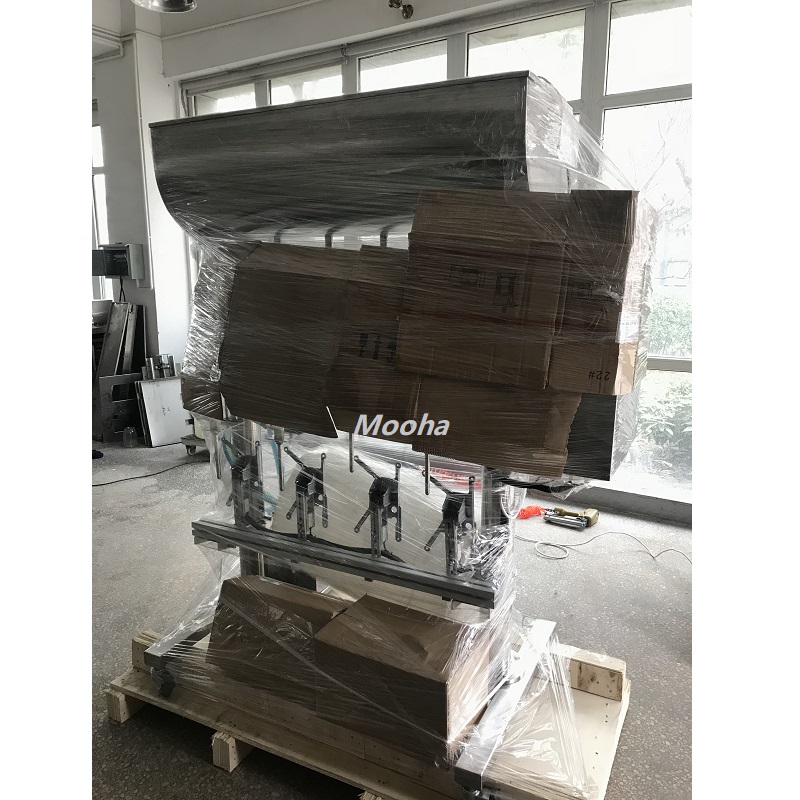
Dense materials demand aggressive mechanical force. Volumetric filling mechanisms provide this necessary power. Piston fillers represent the gold standard for heavy applications. They feature a durable metal cylinder and an internal piston. The piston retracts to draw a precise volume of product from the hopper. It then extends forward. This stroke physically pushes the thick product through the nozzle into the container.
Pump fillers offer another robust alternative. They utilize rotary, gear, or lobe pumps. These systems move high-viscosity liquids continuously. They handle larger fill volumes with remarkable ease. Operators can program the pump to dispense varying amounts without manually adjusting physical stroke lengths.
These robust systems tackle the industry's most challenging products. Consider the heavy-duty requirements of a honey bottle filling machine. Honey is incredibly sticky and highly sensitive to temperature shifts. It requires immense torque to dispense cleanly. Similarly, a specialized shampoo filling machine manages stringy fluids. These fluids often trail or drip from the nozzle. Volumetric systems eliminate these drips using positive shut-off valves.
A dedicated viscous liquid filling machine delivers powerful extrusion. It forces dense pastes into containers swiftly. Many thick products contain solid particulates. Salsas, fruit preserves, and exfoliating scrubs feature delicate chunks. Lobe pumps move these mixtures gently. They prevent the machinery from crushing the valuable particulates during the dispense cycle. The resulting volumetric dosing remains incredibly accurate.
Despite their power, these machines introduce specific operational hurdles. They require a much larger initial investment than gravity systems. Their internal components are highly complex. Teardown procedures demand significant labor hours. Operators must dismantle heavy cylinders and intricate pump heads. Cleaning these systems thoroughly takes more time compared to simple gravity setups.
Facility managers constantly face the hybrid dilemma. They often ask if they can process water and heavy lotions on a single line. This question arises when companies want to maximize their floor space. They hope one machine can conquer entirely different physical challenges.
Technological compromises inevitably occur when mixing product types. You can technically force a heavy pump filler to move a water-like substance. However, using a powerful viscous system as a thin liquid filler causes major issues. The high-pressure mechanism creates massive splashing. It agitates the thin fluid violently. The machine runs slower than a dedicated gravity system. It becomes an operational overkill.
Conversely, gravity systems cannot push heavy gels. If you run both extremes, you need a strict evaluation framework. We recommend applying the following logical steps to your production strategy:
Calculate the 80/20 rule: Identify which product category generates 80 percent of your volume. Optimize your primary equipment specifically for that dominant fluid type.
Evaluate Servo-driven technology: Servo motors offer highly programmable speeds. They can slow down for thin liquids and ramp up torque for thick pastes. They bridge the gap better than standard pneumatic systems.
Assess dedicated lines: Running two separate, specialized lines often proves more efficient. Dedicated machines eliminate severe changeover delays. They prevent cross-contamination between radically different formulas.
Attempting to build a universal machine usually results in a master of none. You must prioritize the physics of your most profitable product.
Selecting the optimal equipment requires methodical evaluation. You must analyze specific criteria to protect your operational efficiency. We have compiled a critical checklist to guide your procurement process. Following these steps mitigates implementation risks.
Accuracy vs. Waste Analysis: Volumetric accuracy acts directly as a protective measure against product loss. High-value viscous products demand extreme precision. Overfilling a luxury cosmetic cream by just one percent destroys your profit margins. You must evaluate the tolerance guarantees of any proposed machine.
Scalability and Automation Integration: Production demands change rapidly. You should compare semi-automatic units against fully automatic systems. Look for modular manifolds. Determine if you can easily expand the machine from two filling heads to four, six, or eight heads. Scalable equipment grows alongside your operational output.
Compliance and Material Standards: Regulated industries enforce strict material requirements. Food and pharmaceutical products mandate FDA or 3A Sanitary compliance. Ensure all contact parts utilize 316L stainless steel. This high-grade metal resists aggressive chemicals. It prevents dangerous corrosion. Verify that the system supports Clean-In-Place (CIP) readiness for hygienic maintenance.
Changeover and Maintenance Efficiency: Multi-product facilities live and die by their changeover times. Evaluate how many minutes it takes to dismantle the fluid path. Assess the complexity of cleaning nozzles and replacing hoses. Switching from a strongly scented body wash to an unscented lotion requires absolute cleanliness. Fast teardowns keep your production line moving.
Overlooking any of these criteria leads to severe long-term operational friction. You must interrogate the machine's specific capabilities against your daily floor realities.
Liquid viscosity fundamentally dictates the physics of your production line. There is no universally perfect machine. You must seek the most scientifically appropriate mechanism for your fluid's specific cps rating. Matching the right technology to the right liquid eliminates bottlenecks and prevents costly equipment failures.
We strongly advise implementing a rigorous shortlisting logic. Never purchase equipment based purely on specifications. You must request comprehensive vendor testing. Send your actual product samples to the manufacturer. Demand they test the fluid under extreme temperature variations. This Factory Acceptance Testing proves the machine can handle your real-world conditions before delivery.
Your next step requires decisive technical alignment. Map your entire product matrix alongside an applications engineer. They will help you configure a tailored filling line solution. Taking this analytical approach guarantees a highly efficient, scalable, and reliable production environment.
A: You can determine viscosity using a digital viscometer in your facility. This instrument measures the exact resistance of the fluid. Alternatively, you can send a product sample directly to the machine manufacturer. Their lab technicians will conduct standardized tests to establish the precise cps rating.
A: Volumetric filling dispenses an exact, mathematical volume of product. It works best for opaque bottles and thick liquids. Fill-to-level filling dispenses liquid until it reaches a specific visual line on the container. This method is ideal for retail glass bottles and thin liquids requiring cosmetic uniformity.
A: Yes, heating is often necessary. Elevating the temperature temporarily lowers the cps rating of dense products like waxes, honey, or balms. This thermal adjustment allows the thick liquids to flow much faster. It prevents unnecessary strain on the machine's pumps and internal mechanisms.
A: Foaming is typically caused by severe fluid agitation or using high-pressure nozzles. The rapid movement introduces air into the liquid. You can solve this by utilizing diving nozzles for bottom-up filling. Reducing the overall pump speed also minimizes turbulence and controls the aeration.

