
English 


Views: 0 Author: Site Editor Publish Time: 2026-08-25 Origin: Site


Manufacturing facilities handling high-viscosity products face a hidden operational drain: extended changeover times, unplanned downtime, and sanitation-related bottlenecks. Thick, sticky, or particulate-heavy liquids inherently resist standard flushing procedures. When equipment architecture lacks optimization for sanitation, these fluids create boundary layers inside piping, leading to clogged nozzles, valve failure, and severe cross-contamination risks. Standard gravity-fed systems or basic overflow fillers simply cannot process or purge these materials effectively.
Evaluating a liquid filling machine for viscous applications requires prioritizing cleaning infrastructure long before finalizing equipment specifications. Operations managers must compare Clean-in-Place (CIP) capabilities, pump design, and teardown efficiency to ensure the system meets production demands. A machine capable of high-speed filling loses all operational value if it requires a four-hour manual teardown between product batches. By focusing on sanitary design and fluid dynamics, facilities can drastically reduce changeover windows and protect their overall equipment effectiveness.
Sanitary design dictates operational efficiency; tool-less disassembly and flush-in-place capabilities drastically reduce Mean Time to Clean (MTTC) and protect production capacity (Bottles Per Minute/BPM).
Viscous applications require specific pump architectures (such as piston or rotary lobe) that inherently complicate cleaning compared to gravity-fed systems, necessitating rigorous validation.
Automated Clean-in-Place (CIP) systems require higher upfront capital but offer rapid ROI for facilities executing multiple daily changeovers.
Long-term machine efficiency relies on a balancing act: utilizing CIP for routine changeovers while scheduling periodic Open Plant Cleaning (OPC) for deep "filler resets."
Proper nozzle configuration, specifically bottom-up filling, minimizes exterior bottle contamination and reduces secondary cleaning requirements on the line.
Fluid dynamics dictate how you maintain your equipment on the floor. Viscosity, shear stress, tackiness, and particulate suspension fundamentally alter standard cleaning requirements. High-viscosity fluids do not flow easily under low pressure. They adhere to internal stainless steel surfaces, creating stubborn boundary layers inside pipes and pump cavities. When operators apply standard water flushes, the water simply channels through the center of the pipe. It takes the path of least resistance, leaving the sticky residue completely intact along the walls. This resistance threatens long-term machine efficiency and demands specialized sanitation protocols.
You also have to account for the behavior of non-Newtonian fluids. Thixotropic products like ketchup or heavy lotions undergo shear-thinning. They become less viscous under the mechanical stress of a pump, making them easier to move. However, the moment the pump stops, they immediately thicken back up. If they sit in a dead leg or a valve cavity, they solidify into a plug. Dilatant fluids, which thicken under shear stress, present the opposite problem and require slow, steady pump strokes to prevent them from turning into a solid mass inside the cylinder.
Extended cleaning times for these viscous products directly reduce daily throughput and overall equipment effectiveness (OEE). Consider a facility running three different product SKUs per shift. If a cleaning protocol takes 90 minutes instead of 30 minutes, you lose three hours of production capacity every single day. Capacity planning must account for Mean Time to Clean (MTTC). A high-speed filler rated for 120 bottles per minute yields zero output while your maintenance team is manually scrubbing piston blocks in a wash sink.
Viscous products accumulate in specific, predictable zones within a filling system. If you do not target these areas during sanitation, you will fail microbial swabs and experience mechanical breakdowns.
Dead Legs in Piping: Any T-junction or capped pipe section where fluid can stagnate becomes a primary collection point for sticky residues.
Tri-Clamp Gaskets: Over-tightened or degraded U-cups and O-rings create microscopic crevices where product lodges and breeds bacteria.
Rotary Valve Clearances: If the system processes suspensions, particulates like seeds or abrasive powders lodge in the tight tolerances of rotary valves, scoring the metal.
Piston Cylinder Walls: The space behind the piston seals often traps microscopic amounts of product during the retraction stroke, which hardens over time.
Complex Nozzle Tips: Shut-off nozzles with internal pins or screens trap fibers and thick pastes, leading to irregular spray patterns or dripping.
Inadequate cleaning in these zones leads to compounding operational consequences. Trapped organic material causes rapid product spoilage and triggers product recalls. Mechanically, restricted flow pathways cause irregular fill volumes. Operators end up constantly adjusting fill weights to compensate, wasting valuable product. Dried or crystallized residue acts as an abrasive, causing accelerated wear on pneumatic seals and leading to catastrophic mechanical failure during production runs.
Sanitation strategies generally fall into two categories: automated, enclosed cleaning and manual teardown approaches. Clean-in-Place (CIP) systems circulate water, detergents, and sanitizers through the machine's fluid path without requiring operators to dismantle the equipment. Clean-out-of-Place (COP) requires operators to physically break down the machine, remove pumps, valves, and hoses, and wash them in designated sanitation sinks. Choosing between these methods dictates your daily labor allocation and production scheduling.
Integrated CIP systems become viable under specific operational parameters. Facilities executing high-frequency changeovers rely on CIP to maintain profitability. Highly regulated environments, such as pharmaceutical and dairy manufacturing, mandate CIP to eliminate human error and ensure repeatable, verifiable sanitation cycles. For CIP to work, the machine's fluid pathways must be completely free of dead legs, utilizing sanitary welds and self-draining angles.
Evaluating a CIP system requires analyzing the TACT circle: Time, Action, Chemical, and Temperature. Action refers to flow velocity. The system must generate turbulent flow, typically a Reynolds number above 4,000, to physically scour viscous residue from pipe walls. Chemical dosing automation ensures the correct concentration of caustics or acids is applied consistently. Temperature control is equally important. High-sugar or wax-based products require sustained high temperatures to melt before they can be flushed out of the system.
Despite the efficiency of automation, COP remains unavoidable in certain scenarios. Extremely thick pastes, such as heavy caulking compounds or dense peanut butter, resist CIP flow velocities entirely. Physical scrubbing is the only way to remove the product. Facilities with low-frequency changeovers running the same product for weeks at a time often find the capital investment of a fully automated CIP system unnecessary.
Manual Open Plant Cleaning (OPC) schedules carry significant labor costs and consistency risks. Human operators vary in their thoroughness. A component might be scrubbed perfectly on a Tuesday morning but rushed on a Friday afternoon. Every time a machine is dismantled, operators risk dropping precision parts, scratching polished cylinder walls, or losing O-rings. Reassembling components incorrectly leads to leaks and immediate downtime upon startup.
Long-term operational stability requires a hybrid approach. Even the most advanced CIP systems cannot replace the need for periodic manual intervention. Facilities must implement deep cleaning protocols, often referred to as "filler resets." While CIP handles the daily or shift-to-shift changeovers, an OPC schedule must be enforced weekly or monthly depending on the product profile.
During a filler reset, maintenance teams completely dismantle the fluid path. They inspect seals for degradation, clear hidden buildup that CIP fluid dynamics missed, and replace wear parts. This complete reset safeguards product integrity. It resets the machine's baseline performance, preventing the slow degradation of fill accuracy that occurs when microscopic residue builds up over hundreds of automated cycles.
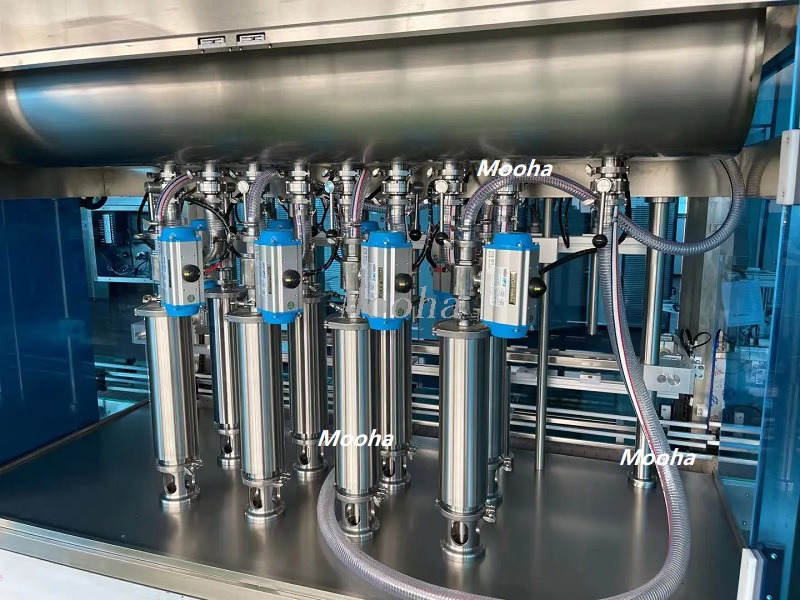
Machine architecture directly dictates sanitation efficiency. When evaluating a viscous liquid filling machine, engineers must map specific hardware features to cleaning outcomes, preventative maintenance schedules, and long-term reliability. A machine built with standard threaded pipe fittings will fail sanitary audits immediately, regardless of the pump's power. Proper hardware selection minimizes product entrapment and accelerates both CIP and COP processes.
Gravity and overflow fillers fail with thick liquids. Positive displacement pumps are mandatory. However, the cleanability of these pumps varies drastically. Piston pumps offer exceptional volumetric accuracy for thick pastes. They draw product into a cylinder and push it out via a mechanical stroke. While highly accurate, piston pumps often require the breakdown of the cylinder and removal of the piston head for thorough cleaning, making them heavily reliant on COP.
Rotary lobe pumps feature smooth internal cavities and lobed rotors that push fluid forward. They handle particulates well without crushing them and are inherently better suited for CIP, as high-velocity fluids can circulate through the pump casing effectively. Gear pumps work well for smooth, thick oils but trap particulates in the gear teeth, making them difficult to clean if the product contains solids.
| Pump Type | Viscosity Handling | Particulate Handling | Cleanability (CIP/COP) | Best Application |
|---|---|---|---|---|
| Piston Pump | Excellent (Very High) | Moderate (Risk of seal wear) | COP Heavy (Requires cylinder breakdown) | Thick pastes, heavy creams, accurate volumetric fills. |
| Rotary Lobe Pump | Good (Medium to High) | Excellent (Won't crush solids) | CIP Friendly (Smooth internal cavities) | Food products with chunks, dairy, medium lotions. |
| Gear Pump | Excellent (High) | Poor (Crushes solids, jams gears) | Moderate (Requires high-temp flush) | Smooth motor oils, clear gels, syrups. |
Viscous products tend to string, drip, or splash if dispensed from above the container. To counter this, specialized nozzles dive to the container bottom before dispensing begins. As the liquid level rises, the nozzle retracts at the exact same speed, keeping the tip submerged just below the fluid surface. This bottom-up filling mechanism pushes air out of the container smoothly, preventing voids or air pockets trapped under thick pastes.
Keeping the nozzle submerged prevents aeration and splashing. This eliminates exterior container fouling. When bottles remain clean on the outside, it drastically reduces the secondary cleaning burden on the line. Sticky residue on the outside of a bottle transfers to conveyor belts, jams downstream capping machines, and causes labeling equipment to fail. Bottom-up filling contains the product entirely within the bottle.
When COP is required, the speed of disassembly dictates the labor cost of the changeover. Equipment must utilize Tri-Clamp (Tri-Clover) fittings. These use a simple gasket and a hand-tightened clamp to secure pipe joints, rather than threaded connections that trap bacteria. Quick-release pins on actuator arms and hinged hoppers that swing open for easy access are mandatory features for sanitary environments.
Tool-less design serves as a major factor in reducing labor hours. If an operator needs a wrench and a screwdriver to remove a pump, the changeover time doubles. The risk of stripped threads or damaged hardware also increases. Tool-less teardowns ensure that routine preventative maintenance checks and daily COP protocols are executed swiftly and consistently, without requiring specialized maintenance personnel.
Product profiles dictate the cleaning strategy. A facility packaging industrial adhesives cannot use the same sanitation protocols as a bakery. An industry-wise approach to machine selection ensures that the equipment handles both the dispensing physics of the product and the aggressive cleaning agents required to remove it.
Food manufacturing presents unique challenges with products like fruit preserves, honey, and heavy syrups. These products contain high sugar concentrations that crystallize rapidly when exposed to air during machine downtime. Once crystallized, the sugar acts like glass shards, shredding pump seals upon startup. Cleaning protocols must incorporate sustained hot water flushes to melt and dissolve the sugars before mechanical agitation begins.
When evaluating a bakery jam filling injector, engineers must address the need to flush out seeds and fruit particulates without damaging the internal clearances of the pump. Rotary lobe pumps are preferred here, as they allow particulates to pass through without being crushed. The cleaning cycle must ensure that no seeds remain trapped in the rotary valves, which would cause bacterial growth and immediate spoilage of the next batch.
Cosmetic facilities frequently handle dozens of SKUs on a single line. A liquid bottle filling machine might switch from a dark, heavily scented body lotion to a clear, unscented facial gel within the same shift. The workflow for these changeovers requires absolute precision to prevent cross-contamination. Even a microscopic trace of pigment like titanium dioxide or a heavy fragrance left in a nozzle will ruin the subsequent batch of clear gel.
The protocol for validating the removal of allergens, colorants, and stubborn fragrances involves multiple chemical washes. Operators flush the system with a detergent to break down the oil or wax base of the lotion, followed by a neutralizing rinse to strip the fragrance, and a final sanitizing pass. Machine fluid paths must be highly polished to a specific Ra finish to prevent pigments from adhering to microscopic abrasions in the stainless steel.
Chemical filling lines deal with products explicitly designed to stick to surfaces. Adhesives, epoxies, and heavy industrial greases present severe safety and cross-contamination risks. Water-based CIP systems are entirely ineffective here. These lines require specialized solvent-flushing capabilities, utilizing aggressive chemicals like acetone, MEK, or mineral spirits to break down the product.
Dealing with volatile or highly reactive viscous liquids requires explosion-proof (Class 1 Div 1) cleaning environments. The filling machine's electrical enclosures, motors, and sensors must be intrinsically safe to prevent sparks while solvent flushes are occurring. The seals and hoses must be chemically inert to withstand repeated exposure to harsh industrial solvents without melting or degrading.
Commissioning a new filling line introduces operational vulnerabilities. Facilities often specify the correct pump and nozzle technology but fail to account for the secondary variables of sanitation. Addressing common pitfalls during the procurement and installation phases prevents catastrophic downtime later.
A primary implementation risk involves harsh caustic or acidic cleaning agents degrading O-rings, gaskets, and flexible hoses. If a facility uses aggressive peracetic acid or high-concentration sodium hydroxide for CIP, standard Buna-N or silicone seals will swell, crack, and eventually disintegrate. This leads to product leaking into the machine's pneumatic cylinders or dripping onto the conveyor.
Engineers must specify exact seal materials during the procurement phase based on the facility's standardized cleaning chemicals. Matching the elastomer to the cleaning chemical is non-negotiable to prevent line failure.
| Seal Material | Chemical Resistance | Temperature Limit | Best Used For |
|---|---|---|---|
| Buna-N (Nitrile) | Poor with strong acids/caustics | Up to 250°F | Standard water, mild detergents, oils. |
| EPDM | Excellent with caustics and steam | Up to 300°F | High-temp CIP, dairy, food processing. |
| Viton (FKM) | Excellent with oils and solvents | Up to 400°F | Cosmetics, industrial chemicals, heavy greases. |
| PTFE (Teflon) | Universal chemical resistance | Up to 500°F | Aggressive solvents, highly reactive chemicals. |
Sophisticated cleaning features frequently fail due to operator error, bypassed protocols, or neglected routine maintenance. If an operator does not run the CIP cycle at the correct temperature, or fails to reassemble a piston pump properly after a COP teardown, the machine will fail regardless of its engineering quality.
Mitigation requires strict administrative controls. Facilities must mandate vendor-supplied, video-documented Standard Operating Procedures (SOPs). Hands-on training must be conducted during the Factory Acceptance Testing (FAT) before the machine ever leaves the manufacturer. Maintenance managers must implement a strict Preventative Maintenance Checklist to monitor equipment health.
Daily: Inspect nozzle tips for dried residue and verify U-cup seals are seated correctly.
Weekly: Tear down rotary valves to check for scoring from particulates.
Monthly: Replace all product-contact O-rings regardless of visible wear to prevent unexpected mid-run failures.
Quarterly: Calibrate CIP flow meters to ensure turbulent flow velocities are still being met during wash cycles.
For viscous products, a filling machine's value is intrinsically linked to its cleanability. Inefficient cleaning negates high-speed filling capabilities, destroys production schedules, and shortens equipment lifespan through accelerated wear. Buyers must match their pump type and CIP/COP strategy directly to their product's viscosity, particulate load, and daily changeover frequency to ensure operational success.
Audit your current Mean Time to Clean (MTTC) to establish a baseline, identifying exactly where operators spend the most time scrubbing or dismantling equipment.
Draft a comprehensive Product Requirement Document (PRD) that includes specific cleaning KPIs, such as maximum allowable changeover time and required CIP flow rates.
Specify seal materials explicitly based on the exact chemical data sheets of your facility's current sanitation detergents and solvents.
Insist on a live cleaning and teardown demonstration during the vendor's Factory Acceptance Test (FAT) using your actual viscous product, not water.
A: Piston pumps are ideal for highly accurate, volumetric filling of thick pastes, though they require manual teardown for cleaning. Rotary lobe pumps are the best choice for applications requiring automated Clean-in-Place (CIP) capabilities and for products containing delicate particulates that cannot be crushed.
A: Bottom-up filling utilizes diving nozzles that start at the base of the container and rise with the liquid level. This prevents splashing, aeration, and stringing, keeping the exterior of the bottle and the surrounding conveyor belt completely free of sticky residue, thereby eliminating secondary cleanup.
A: No. Standard gravity or overflow fillers designed for water-like liquids lack the pressure to move thick fluids. They will fail, clog, or dispense highly inaccurate volumes. Viscous products strictly require positive displacement systems, such as piston, gear, or rotary lobe pumps, to force the liquid through the pathways.
A: Clean-in-Place (CIP) is an automated process that flushes internal pathways with water and chemicals without requiring disassembly. Clean-out-of-Place (COP) involves manually tearing down the machine to wash components externally. Even with advanced CIP, periodic COP "filler resets" are necessary to inspect seals and clear hidden buildup.
A: Cleaning requires sustained hot water flushes to dissolve crystallized sugars before mechanical agitation. It is critical to use sanitary fittings to remove particulate traps where fruit seeds accumulate, and operators must avoid using abrasive tools or wire brushes on precision nozzles to prevent scoring the metal.
A: The aggressive caustics, acids, and sanitizers used to break down viscous residues can rapidly degrade standard rubber seals. If incompatible, seals will swell, crack, and fail, causing leaks. Specialized materials like PTFE, EPDM, or Viton must be specified to match the facility's specific cleaning chemicals.
A: Routine checks ensure that nozzles, valves, and pneumatic seals are functioning correctly and are free of microscopic product buildup. Catching wear early prevents unplanned downtime, avoids catastrophic mechanical clogs during production runs, and eliminates the risk of costly cross-contamination between batches.

