
English 


Views: 0 Author: Site Editor Publish Time: 2026-06-28 Origin: Site


Airborne powder dust is far more than a simple housekeeping nuisance. It silently drains your operational profitability day after day. Fugitive particulates lead directly to measurable material giveaway, premature equipment wear, and severe safety compliance risks. Historically, manufacturers relied on fragmented packaging steps. Such outdated methods exposed fine ingredients to the open air, creating continuous contamination loops. Today, modern facilities shift toward fully integrated, enclosed packaging architectures. This evolution removes manual handling from the equation entirely.
An optimized powder filling sealing line directly targets the root causes of airborne particulates. It stabilizes fill accuracy across every cycle. By eliminating atmospheric exposure, it ensures hermetic seals and ultimately protects your bottom-line yield. You will learn how modern enclosing mechanisms, smart extraction tools, and optimized closing technologies reshape powder processing. Upgrading your infrastructure requires understanding these exact mechanics to safeguard your yield.
Yield Protection: Enclosed dosing and feedback loops prevent costly product giveaway and material loss.
Operational Safety: Integrated dust extraction meets strict combustible dust compliance (e.g., OSHA, ATEX).
Seal Integrity: Clean-jaw technology and localized vacuums ensure powders do not compromise bag closures.
Smart Sourcing: Evaluating lines based on powder flowability, bulk density, and clean-in-place (CIP) requirements is critical for a high-ROI deployment.
Ambient powder dust causes invisible financial leaks. Most facility managers underestimate the true impact of airborne particulates. We must quantify this impact to justify infrastructure upgrades. Micro-losses per cycle compound rapidly over a fiscal year. High-value ingredients suffer the most severe financial deficits. Giving away just two grams of expensive pharmaceutical powder per pouch adds up massively. Over millions of cycles, this material waste devours profit margins.
Equipment degradation represents another massive hidden overhead. Fine particulates behave like abrasive sandpaper. They penetrate sealed bearings and delicate pneumatic systems. This intrusion accelerates mechanical failure across the plant floor. Maintenance downtime spikes. Engineers spend hours replacing prematurely worn seals and linear guides. You lose valuable production time responding to these preventable breakdowns.
Health and regulatory compliance demand equal attention. Airborne dust presents severe respiratory hazards for frontline operators. Combustible dust explosion risks trigger massive regulatory liabilities. Agencies like OSHA rigorously enforce particulate standards. Fines for violating these safety protocols can cripple an operation. Mitigating these hazards requires proactive engineering, not reactive cleaning.
A successful equipment upgrade must meet clear success criteria. You must demonstrably reduce ambient particulate parts-per-million (PPM). The environment should look visibly cleaner during peak production runs. Crucially, you must achieve this cleanliness while maintaining or increasing cycle speeds. Slowing down production to control dust defeats the purpose of automation.
Best Practice: Establish baseline PPM measurements before installing new equipment. Compare post-installation metrics to verify performance improvements.
Common Mistake: Relying on secondary ambient air purifiers instead of capturing dust at the filling source. Source capture is always more effective.
Engineering a clean environment requires specialized internal mechanisms. A truly dust-free powder filling line relies on enclosed dosing architecture. The entire path remains completely isolated from ambient air. Operators load raw materials into sealed upstream hoppers. The system maintains continuous control over the product journey.
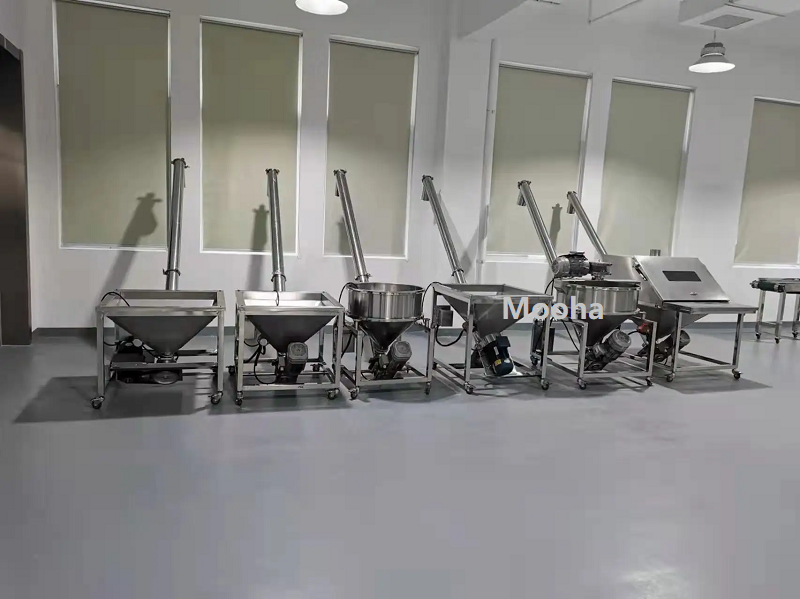
A properly integrated screw feeder powder line exemplifies this control. The auger screw moves material horizontally or vertically inside a steel tube. This enclosed transfer completely eliminates free-fall aeration. Powders cannot catch drafts or disperse. The material enters the dosing chamber in a dense, predictable state.
Bottom-up filling technology further minimizes airborne particles. Traditional fillers drop powder from high above the pouch. This long drop displaces air violently, causing massive dust plumes. Bottom-up mechanisms change this dynamic entirely. The filling nozzle dives deep into the empty container or pouch. It begins dispensing powder at the very bottom.
As the fill level rises, the nozzle retracts in tandem. The tip remains just above the powder bed at all times. This drastically reduces the drop distance. Air displacement occurs gently and predictably. The following features complete the dust-control ecosystem:
Integrated Dust Extraction: Localized vacuum hoods sit exactly at the point of fill. These negative-pressure nozzles capture fugitive emissions instantly. They suck stray particles away before they escape the machine housing.
Vibration Stations: Mechanical agitation settles aerated powders during the filling process. Vibration forces trapped air out of the product matrix.
Settling Cycles: The powder settles safely below the seal line prior to closure. This prevents product displacement when the sealing jaws clamp shut.
Capturing dust at the source protects the sealing zone. It keeps the mechanical footprint pristine. Operators spend less time wiping down the machine frame between shifts.
Evaluating specialized features determines the long-term success of your deployment. When configuring a system for powder bag filling and sealing, seal contamination prevention remains paramount. Stray powder in the seal zone causes catastrophic failures. Micro-channels form inside the seal, allowing oxygen and moisture to enter. The product spoils prematurely.
Assess jaw-cleaning mechanisms rigorously. Modern machines use targeted air blasts to clear the seal area. Some employ localized vacuum suction directly beside the heating jaws. These systems remove stray particles milliseconds before the jaws close. Clean seal zones guarantee hermetic closures. You protect your brand reputation by preventing leaky bags on retail shelves.
You must also compare sealing technologies for challenging environments. Traditional heat sealing works well for clean, granular products. However, fine, sticky powders often require advanced solutions. Ultrasonic sealing provides an excellent alternative. It uses high-frequency vibrations to fuse the packaging material at a molecular level.
Here is a comparison chart of sealing technologies:
| Feature | Traditional Heat Sealing | Ultrasonic Sealing |
|---|---|---|
| Contamination Tolerance | Low. Powder causes micro-leaks. | High. Seals through minor powder residue. |
| Energy Consumption | High. Jaws remain constantly heated. | Low. Energy activates only during seal cycle. |
| Heat Degradation Risk | Moderate. Can melt or scorch sensitive films. | Low. Generates localized friction heat only. |
| Maintenance Needs | Regular replacement of Teflon tape and heaters. | Lower consumable usage, but requires tuning. |
Automated feedback loops elevate dosing accuracy. Integrating a high-speed checkweigher creates a closed-loop system. The checkweigher measures every filled pouch. It feeds this exact weight data back to the auger filler. The filler uses this data to auto-correct future dosing parameters on the fly.
This dynamic adjustment eliminates human error entirely. Operators no longer need to manually tweak dial settings. The machine compensates for slight variations in powder bulk density automatically. Material giveaway drops to near zero.
Changeover and sanitation capabilities dictate overall equipment effectiveness. Evaluate clean-in-place (CIP) features carefully. Tool-less dismantling is an absolute requirement for modern plants. Operators must easily remove hoppers, augers, and funnels without wrenches. Quick teardowns prevent cross-contamination between different product runs. They also drastically reduce sanitation labor hours.
Different manufacturing sectors demand highly customized architectures. Heavy-duty bulk applications face extreme environmental abuse. A dedicated fertilizer powder packaging line operates in harsh, corrosive conditions. Fertilizers and chemical powders eat away at standard metals. These abrasive, high-volume materials require specialized engineering.
Heavy-duty dust enclosures surround the entire bagging zone. Thick, chemical-resistant curtains contain aggressive particulates. Vendors construct these systems using specialized corrosion-resistant materials like 316L stainless steel. The mechanical components must withstand abrasive wear daily. Reinforced load cells and heavy-duty pneumatic valves handle the immense weight of 50kg bags safely.
Conversely, food and pharma grade systems focus entirely on hygiene and preservation. High-value, hygroscopic powders require extreme delicacy. Infant formula, instant coffee, and active pharmaceutical ingredients (APIs) absorb ambient moisture rapidly. A comprehensive powder packaging line in these sectors incorporates strict sanitary design principles.
Sanitary continuous welding eliminates tiny crevices. Bacteria cannot hide in perfectly smooth joints. Flush-gas integration pushes nitrogen into the pouch before sealing. Nitrogen displaces residual oxygen. This gas flushing drastically extends the shelf life of sensitive organic powders. Clean-room compatibility dictates smooth external surfaces, sloped drainage planes, and IP69K washdown ratings. Scalability ensures the line grows alongside your production demands.
Deploying complex machinery carries inherent implementation risks. Upstream integration often presents the largest bottleneck. The new filling line must sync seamlessly with existing upstream infrastructure. Mixers, holding silos, and conveyers must communicate via integrated PLCs.
Poor integration leads to severe flow issues. Powders may form bridges or rat-holes inside the main hopper. When material bridges, the auger runs dry. You get severely underfilled bags. Preventing this requires installing mechanical agitators inside the hopper. These slowly rotating blades break up clumps and keep the powder flowing consistently down into the auger flights.
Facility environmental factors drastically affect powder flowability. High humidity levels cause fine powders to clump aggressively. Ambient temperature shifts alter the product bulk density mid-shift. You cannot solve environmental issues purely through packaging equipment. Address the need for dedicated HVAC integration. Climate-controlled packaging rooms stabilize powder characteristics. Consistent powder behaves predictably inside the auger.
Operator adoption determines the ultimate success of your rollout. Advanced machinery requires highly skilled operators. You must provide rigorous training on complex HMI touchscreen controls. Operators must understand how to navigate recipe menus and adjust timing delays. Dust-collector maintenance requires daily attention. Filters need shaking or replacing on a strict schedule. Proper auger calibration ensures the feedback loop functions correctly. Do not underfund your training programs during a major equipment rollout.
Choosing the correct vendor requires immense due diligence. Never purchase complex equipment based solely on a brochure. The physical characteristics of your product dictate the required engineering. Follow a strict shortlisting process to mitigate procurement risks.
Demand Material Testing: Force the vendor to analyze your actual product. They must conduct comprehensive flowability tests. They should measure tapped bulk density and aeration characteristics. A vendor should never quote a machine without touching your powder first.
Specify Auger Tooling: Use the test results to define the exact auger tooling. Spinner plates stop free-flowing powders from dripping. Straight tubes handle non-free-flowing powders efficiently.
Mandate a Factory Acceptance Test (FAT): Establish clear, non-negotiable KPIs for the FAT. Travel to the vendor facility. Run your actual product through the fully assembled machine.
Measure Sustained Accuracy: Do not accept a five-minute test run. Demand sustained accuracy runs over several hours. Measure the dust particulate levels in the air during the test.
Conduct Changeover Time-Trials: Force the vendor technicians to dismantle the machine. Time the sanitation process. Ensure it meets your operational turnaround requirements.
Evaluate Software Ecosystems: Look for partners offering predictive maintenance software. Sensors should alert operators to bearing wear before a catastrophic failure occurs.
Evaluating vendors meticulously prevents expensive retrofits later. You secure a partner committed to your long-term operational success.
Minimizing airborne dust is never a fortunate byproduct of good packaging. It is a highly engineered feature of a purpose-built processing line. Upgrading to enclosed dosing architectures stops material waste at the source. Implementing smart feedback loops ensures precise fill weights and protects your margins. Utilizing clean-jaw technologies guarantees hermetic seals across every batch.
You must actively pursue these upgrades to remain compliant and profitable. Compile your specific product specifications immediately. Document your bulk density, target weight variations, and required cycle speeds. Reach out to a qualified integration partner to request a comprehensive material trial. Tangible data from a material trial will clearly map out your path to a cleaner, highly efficient production floor.
A: Bulk density dictates the specific tooling required inside the auger filler. Free-flowing powders slide easily but leak. They require spinner plates or cut-off valves to prevent dripping between cycles. Non-free-flowing powders compact easily. They require straight tubes and continuous agitation to push the dense material down smoothly. Using the wrong tooling causes severe dust plumes and inaccurate dosing weights.
A: Yes, you can retrofit older machines to some extent. You can install add-on dust extraction hoods near the sealing jaws. Adding anti-static bars helps prevent powder from clinging to the film. However, these are partial fixes. Fully integrated systems offer superior, hermetic particulate management because the entire material path is enclosed from hopper to pouch.
A: The typical ROI timeline ranges from 12 to 24 months. You calculate this return through multiple vectors. Reclaimed material yield often provides the largest savings. You also factor in drastically reduced sanitation labor. Fewer maintenance-related shutdowns boost overall throughput. Finally, eliminating the risk of regulatory fines contributes heavily to a rapid financial payback.

