
English 


Views: 0 Author: Site Editor Publish Time: 2026-11-26 Origin: Site


Every packaging engineer knows the headache. You set up a run for a fine nutritional supplement or a chemical compound. Within minutes, fine dust escapes. It settles exactly where you do not want it—right on the container threads. This stubborn residue compromises the airtight seal of your caps. It interferes with label adhesion. Ultimately, it creates a messy appearance that destroys consumer trust.
Manual cleaning hacks might function adequately for small pilot batches. Wielding specialized brushes or blasting compressed air are common stopgaps. Commercial production, however, demands a significantly more robust approach. For growing facilities, the ultimate solution lies not merely in reactive cleaning. The goal is preventing the dust entirely. We will explore both manual removal techniques for small-scale operations and the automated engineering solutions integrated into modern packaging machinery. These advanced systems keep your container threads spotless and your production running continuously.
Recent industry analysis reveals a massive shift in packaging protocols. Regulatory bodies are strictly enforcing cross-contamination guidelines. Meanwhile, active pharmaceutical ingredients are becoming increasingly potent. This combination forces manufacturers to abandon reactive cleaning methods. Today, the industry standard dictates proactive dust containment directly at the nozzle.
Furthermore, automation is no longer a luxury for large corporations. Mid-sized facilities are rapidly adopting enclosed, negative-pressure filling environments. By capturing particulates before they settle, plants drastically reduce downtime associated with sensor cleaning and machinery maintenance. This predictive mitigation approach is reshaping how modern production lines are engineered.
Identify the Cause: Observational data indicates that static electricity, high ambient humidity, and improper nozzle placement are the primary engineering reasons particulates stick to threads during the filling cycle.
Manual vs. Automated: Manual brushing and pneumatic air-blowing function for low-volume tasks. High-speed commercial production requires automated dust extraction and vacuum suction systems to maintain consistency.
Prevention is Key: Investing in high-quality machinery equipped with diving nozzles and anti-static technology stops residue accumulation before it even initiates.
Scale Matters: Upgrading from manual filling mechanisms to automated linear systems drastically reduces product waste and measurable contamination risks.
Industry-Specific Solutions: The pharmaceutical and cosmetic sectors benefit immensely from specialized equipment designed specifically for micro-dose precision and strict environmental cleanliness.
To effectively eliminate fugitive dust, one must first deconstruct the physical mechanics that cause fine particles to adhere to container surfaces. Particulate behavior during the packaging process is highly volatile. It is influenced by multiple environmental variables.
Static electricity acts as one of the most common invisible culprits behind particle adhesion. Dry material moves rapidly through stainless steel hoppers, augers, and funnels. This resulting friction generates a strong triboelectric charge. When this charged material is dispensed into plastic or glass containers, the fine particles are magnetically drawn to the container walls and grooved threads. Without proper grounding or active static neutralization, these particles firmly cling to the surface. They completely resist standard gravity settling.
Environmental conditions within a manufacturing facility play a critical role in material behavior. Many products within the nutritional supplement and chemical industries are highly hygroscopic. They actively absorb moisture directly from the surrounding air. When humidity levels fluctuate, these fine particles clump together. If even microscopic moisture is present on the inner or outer threads of a container, airborne dust instantly adheres upon contact. This creates a sticky paste that is nearly impossible to remove through standard mechanical means.
Outdated or improperly calibrated equipment frequently leads to excessive product displacement. When machinery lacks proper dust control mechanisms or relies solely on stationary nozzles, the material must free-fall from the dispensing point to the bottom of the container. This sudden drop displaces the air inside the bottle. It causes a phenomenon known as billowing. The displaced air carries fine particles upward in a turbulent cloud. It deposits them directly onto the threads before the container ever reaches the capping station.
Ignoring this issue is not merely an aesthetic oversight. It carries measurable financial and operational costs that severely impact the overall integrity of the packaged product.
The primary function of a cap is to provide an airtight secure seal. This protects the product from external elements. The satisfying click of a perfectly seated cap becomes impossible when a microscopic layer of dust acts as a physical barrier. Capping machines rely on precise torque application. Accumulation alters the friction dynamics. It causes the cap to cross-thread or prevents it from seating fully. Consequently, this compromised seal leads to micro-leaks, accelerated product spoilage, and a significantly shortened shelf life.
A pristine container surface is an absolute prerequisite for flawless label application. Dust falling onto the exterior during the filling stage creates a micro-layer of interference between the container wall and the label adhesive. When bottles pass through the labeling station, this dust prevents the adhesive from curing properly. Labels may peel at the corners, bubble unsightly, or detach entirely during transit. This negatively impacts brand presentation and risks regulatory compliance issues.
Sanitation protocols are strictly enforced in heavily regulated sectors. Uncontrolled residue acts as a dangerous vector for cross-contamination. Airborne dust settles on machinery components, conveyor belts, or the exterior of surrounding containers. It creates an unsanitary environment that can harbor bacterial growth or mix inadvertently with subsequent product batches. Maintaining Good Manufacturing Practices requires aggressive mitigation of fugitive dust.
Manual and semi-automatic cleaning methods often serve as a temporary operational baseline. They are typically used for pilot runs, boutique operations, or facilities handling highly specialized low-volume batches.
One of the most frequent manual interventions involves the deployment of targeted compressed air. Operators utilize pneumatic blow-off guns to direct high-velocity air streams at the threads. This physically dislodges the particulates. While generally effective for dry materials, this technique demands careful pressure regulation. Excessive force simply blows the dust directly into the ambient environment. It relocates the problem rather than removing it. This ultimately necessitates secondary facility cleaning.
Physical abrasion is sometimes required for tough-to-reach spots or sticky residues caused by moisture. Imagine an operator spending hours meticulously wiping down sticky whey protein residue from hundreds of threaded caps. They typically use lint-free wipes dampened with pharma-grade isopropyl alcohol. Stiff-bristled nylon brushes are also utilized to clear grooved areas. This ensures a clean surface but introduces potential risks of physical contamination if brush bristles break off.
Manual methods can achieve clean surfaces in small batches. However, they are inherently unsustainable for a growing powder bottling line. Prohibitive labor costs and severe time inefficiency throttle factory throughput. Human error dictates that some bottles will be cleaned perfectly while others retain microscopic residue. Relying on manual wiping creates a massive operational bottleneck.
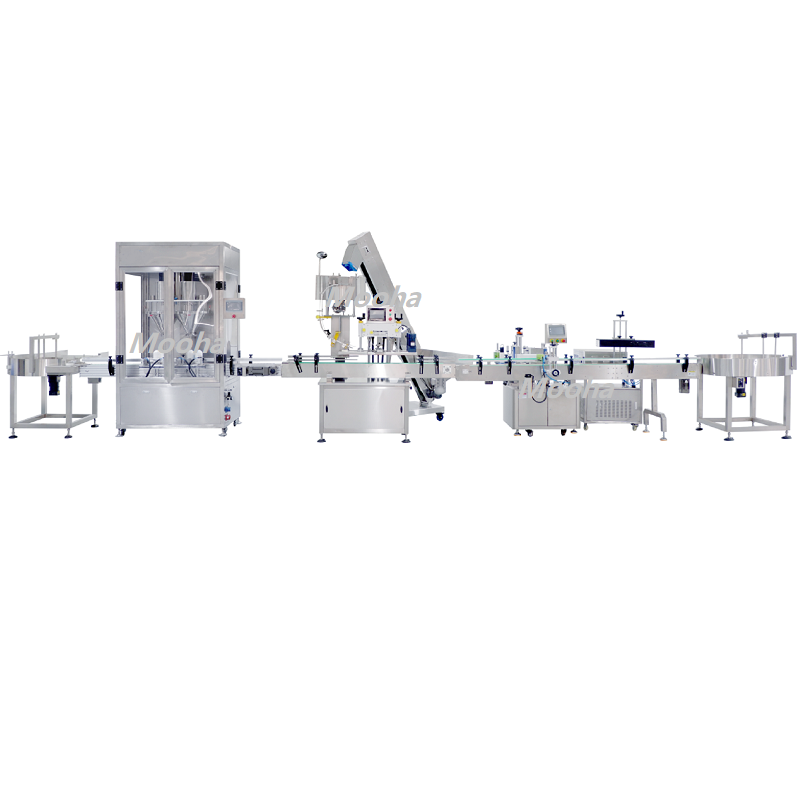
Commercial production facilities must pivot from manual remediation to automated engineering solutions. This is the only way to achieve consistent quality at high speeds. Modern packaging lines incorporate integrated cleaning modules to manage dust continuously and seamlessly.
Advanced automated lines utilize localized negative pressure zones to manage airborne particles. Dust extraction systems incorporate specialized vacuum hoods positioned directly adjacent to the filling nozzle. The vacuum system instantly captures any airborne micro-particles as the auger dispenses the product. This continuous suction ensures that the ambient air immediately surrounding the fill zone remains clear. It drastically reduces the volume of fugitive dust that reaches the threads.
Automated air-rinsing modules can be installed directly between the filling and capping stations. These sophisticated modules utilize precision air nozzles that blast ionized filtered air across the threads. A simultaneous vacuum system collects the dislodged particles. This closed-loop air-washing process guarantees that any rogue particles escaping the initial extraction are fully removed before the cap is applied.
Neutralizing the static charge is a highly effective prevention strategy. Automated lines often integrate ionizing bars or static-eliminating blowers right at the filling station. These devices emit a balanced stream of positive and negative ions. They neutralize the static charge on the plastic or glass bottles. Once the charge is neutralized, the material loses its magnetic attraction and drops smoothly into the container.
| Method Type | Specific Technique | Mechanism of Action | Efficiency at Scale | Residue Reduction Capability |
|---|---|---|---|---|
| Manual | Air Blow-Off Guns | Pneumatic force | Low | Moderate — relocates dust |
| Manual | Solvent Wipes | Physical abrasion | Very Low | High — labor-intensive |
| Automated | Vacuum Extraction | Negative pressure | High | High — captures dust |
| Automated | Ionizing Bars | Static neutralization | High | Very High — prevents cling |
The most efficient way to handle this issue is to engineer the process so that dust never reaches the threads in the first place. Upgrading machinery is a strategic investment in preventative quality control.
Standard stationary nozzles drop material from a fixed height. This displaces air and causes dust to billow upward. In contrast, modern machinery utilizes precision diving nozzles to counteract this physical reaction. A diving nozzle descends mechanically deep into the container. It starts the fill process near the bottom. The nozzle synchronously retracts upward as the material level rises. It keeps the dispensing point just millimeters above the product line. This minimizes the free-fall distance and significantly reduces air displacement.
Inconsistent flow can lead to splashing and overspill. Servo-driven augers provide exact volumetric control over the dispensing process. Unlike mechanical clutch systems, servo motors allow operators to program specific acceleration and deceleration profiles for the auger screw. This ensures that the material is dispensed smoothly. It stops instantly without dripping or trailing.
Time exposure is a critical factor in accumulation. The longer an open filled bottle travels down a conveyor, the more susceptible it is to ambient facility dust. A modern powder filling capping labeling line is engineered for continuous seamless operation. Bottles are sealed almost immediately after being filled. This rapid transition minimizes the window of exposure. It ensures that the sealing surface remains pristine.
Certain industries face extreme regulatory requirements where standard dust control is simply insufficient. Pharmaceutical and clinical cosmetic manufacturing require specialized equipment to handle high-value sensitive materials with absolute precision.
Filling tiny vials with highly potent active pharmaceutical ingredients presents a unique set of engineering challenges. Even a fraction of a milligram of residue on the vial neck can result in an inaccurate dosage or a failed seal. Standard vacuum extraction is often too aggressive for micro-doses. It may inadvertently suction the product itself out of the vial. Specialized equipment utilizes high-precision servo-driven micro-augers paired with custom-tooled diving nozzles. This eliminates the dust billow entirely.
To address strict sterility requirements, facilities utilize a vial powder filling capping line configured as a monoblock system. A monoblock integrates the filling, stopper insertion, and aluminum cap crimping processes into a single compact enclosed unit. These systems handle precise weights down to 100mg while maintaining clinical sterility under HEPA filtration. The vial never leaves the controlled micro-environment between filling and sealing. Therefore, the risk of ambient dust settling is virtually eliminated.
Recognizing the operational thresholds of current machinery is vital as a business grows. Transitioning from manual processes to fully automated systems requires careful timing and data analysis to maintain profitability.
Facility managers must track specific key performance indicators to determine when manual cleaning is no longer viable. An increasing rate of rejected products due to faulty seals is a massive red flag. Rising labor costs associated with manual bottle wiping indicate your current system is creating a bottleneck. An upgrade is empirically justified when the cost of managing the residue exceeds the depreciation cost of new machinery.
Moving to an automated single head powder bottling line is the logical next step for small to medium-sized enterprises. These linear systems handle a broad fill range—typically from 2g up to 5000g. They introduce built-in dust control features and operate on a continuous conveyor setup. They automatically index bottles under the fill head, apply vacuum extraction, and move them directly to the capper without human intervention. This stabilizes product quality and eliminates manual handling errors.
A single dispensing head may eventually reach its maximum cycles per minute for high-volume production facilities. Manufacturers transition to double head machines to future-proof operations without sacrificing cleanliness. Advanced systems handling 10g to 5kg capacities utilize a bulk and dribble feeding process. They dispense 90 percent of the weight rapidly, then top off the final 10 percent slowly. This prevents the forceful displacement of air that typically causes splashing. It ensures high-speed output and spotless sealing surfaces.
Selecting the appropriate machinery requires a thorough technical assessment of the product being packaged. The specific environmental conditions of the manufacturing facility must also be considered.
Not all materials behave the same way under mechanical stress and gravity. The flow characteristics of your specific product will dictate the exact type of tooling, agitation, and dust control required. Free-flowing materials tend to drop cleanly but can bounce upon impact. Non-free-flowing materials tend to bridge and clump. Dusty lightweight materials are highly susceptible to static.
| Material Category | Typical Characteristics | Examples | Recommended Machine Features for Residue Prevention |
|---|---|---|---|
| Free-Flowing | Granular, does not clump, flows easily under gravity. | Salt, granulated sugar, coarse coffee. | Standard auger with a spinner plate or cut-off flap to prevent post-fill dripping. |
| Non-Free-Flowing | Cohesive, tends to bridge or rat-hole, requires agitation to move. | Baking flour, whey protein, finely milled spices. | Servo-driven auger with independent agitation motors; diving nozzles to reduce splash distance. |
| Dusty / Ultrafine | Extremely fine particles, easily becomes airborne, highly susceptible to static. | Talcum, toner, pharmaceutical APIs. | Integrated vacuum dust extraction hoods; anti-static ionizing bars; bottom-up filling mechanisms. |
| Sticky / Hygroscopic | Absorbs moisture from the air, clumps easily, adheres to metal and plastic. | Certain chemical compounds, dried fruit mixes. | Climate-controlled enclosures; specialized Teflon-coated auger tooling; automated air-washing stations. |
Off-the-shelf machinery is rarely sufficient for complex packaging operations. You must customize your equipment to achieve a truly residue-free production environment. Working with experienced packaging machinery manufacturers allows you to tailor your line to your precise operational needs. Customization might include integrating specific dust-extraction manifolds that connect to your facility central HVAC system. A tailored approach ensures the highest return on investment by directly addressing specific residue challenges.
Manual wiping is a band-aid. Engineering a dust-free fill is the cure. Brushes and compressed air simply cannot support a scaling business. The most effective way to handle fugitive dust is to prevent it from settling in the first place. Upgrading to modern automated machinery equipped with diving nozzles, vacuum dust extraction, and anti-static technology ensures your bottles remain pristine. Investing in the right automated machinery guarantees perfect seals, flawless labels, and a superior product for your customers.
Ready to eliminate dust bottlenecks in your facility? Evaluate your current production volume and material characteristics. Visit Shmooha to explore customizable, high-precision filling lines engineered specifically to keep your packaging flawless and your operations running at peak efficiency.
In highly regulated industries like pharmaceuticals, the acceptable limit is effectively zero. Any residue can compromise the induction seal or torque specifications, leading to batch rejection. In food and cosmetics, while visual standards might be slightly more forgiving, engineering standards dictate that threads must be clean enough to ensure 100 percent seal integrity and zero label adhesion failure.
Bridging occurs when cohesive materials form an arch over the auger, stopping the flow. To prevent this, modern filling machines utilize independent, servo-driven agitation motors inside the hopper. These agitators constantly stir the material, breaking up clumps and ensuring a consistent, uniform density as the product is fed down into the dosing auger.
Using a lint-free wipe lightly dampened with a food-safe or pharma-grade solvent like high-purity isopropyl alcohol is highly effective for manual cleaning. The solvent helps dissolve the sticky residue without leaving harmful trace chemicals behind. However, preventing sticky residue in an automated environment requires strict environmental controls, such as maintaining low ambient humidity.
Dust extraction systems utilize strategically placed vacuum hoods positioned immediately adjacent to the filling nozzle. The vacuum generates a localized area of negative pressure as the auger dispenses the material. This instantly sucks up any airborne micro-particles and fine dust billowing from the displaced air. It safely routes the excess material into a centralized collection filtration system.
Yes, static electricity is a primary culprit. Both plastic bottles and dry materials easily generate static charges through the friction of moving along conveyor belts and through metal machinery. This triboelectric charge acts like a magnet. It aggressively pulls fine particles directly onto the sides and threads of the bottle. Advanced packaging lines integrate anti-static devices to neutralize this charge before filling.
Absolutely. A high-quality single head machine can be engineered with the exact same advanced features found in massive multi-head industrial machines. Equipping a single-head system with precision diving nozzles, servo-driven augers, and integrated dust extraction hoods makes it highly effective at preventing spills. It is an ideal cost-effective solution for small to medium production runs.
Residue rarely stays confined to the top of the container. Vibrations during transport cause the residue to spill over and cascade down the sides. This fine dust creates a physical barrier between the surface and the label adhesive when the bottle reaches the labeling station. This disruption prevents proper bonding. It causes labels to peel at the edges, form unsightly bubbles, or fall off entirely.

