
English 


Views: 0 Author: Site Editor Publish Time: 2026-10-02 Origin: Site


Factory cleanliness faces one relentless enemy: airborne particulates. Picture a busy production floor. A heavy batch of dry chemicals drops into an open-mouth sack. Violently displaced air rushes upward instantly. It carries millions of microscopic particles directly into the operator's breathing zone. This fugitive dust cloud hovering at the bag opening is a critical threat to operational efficiency, worker safety, and product quality. Stray particles settling on the inner lips of a sack cause catastrophic seal failures. These failures inevitably lead to spoilage and costly retail returns. How do industry-leading packaging facilities conquer this challenge? The secret lies in upgrading to a specialized powder filling sealing line engineered with targeted dust-control mechanisms. This guide explores exactly how modern equipment captures, controls, and eliminates fugitive particulates at the spout.
Before examining specific mechanical interventions, we must recognize why mitigating dust is a critical bottom-line issue for your enterprise.
Compromised Sealing: A fine layer of product coating the interior plastic prevents thermal sealing jaws from melting the layers together properly. Operators frequently discover weak seals or micro-leaks during water-bath quality control checks. This dramatically reduces product shelf life.
Worker Safety and Health: Inhaling fine particulates over a typical shift poses severe respiratory risks to machine operators. Regulatory bodies are increasingly cracking down on permissible exposure limits on the factory floor.
Explosion Hazards: Combustible materials suspended in ambient air can ignite with a single stray spark from a forklift. This poses a catastrophic safety risk to the entire facility.
Product Yield Loss: Every gram of material blown into the atmosphere is inventory you paid to process but cannot sell. This invisible waste steadily accumulates into staggering financial losses that directly impact profit margins.
Looking at the broader manufacturing landscape, safety standards are evolving rapidly. There is a massive shift toward stricter workplace compliance regarding combustible dust management. Recent industry reports highlight that modern facilities are transitioning away from passive overhead ventilation. Instead, they are adopting smart, fully enclosed systems. Today's cutting-edge operations increasingly rely on smart sensors. These sensors monitor airborne particulate levels in real-time right at the bag opening. If dust concentrations breach safe thresholds, the system automatically pauses the line. Proactive dust control is no longer just a hygiene preference. It is a strict regulatory mandate driven by empirical data and workplace safety laws.
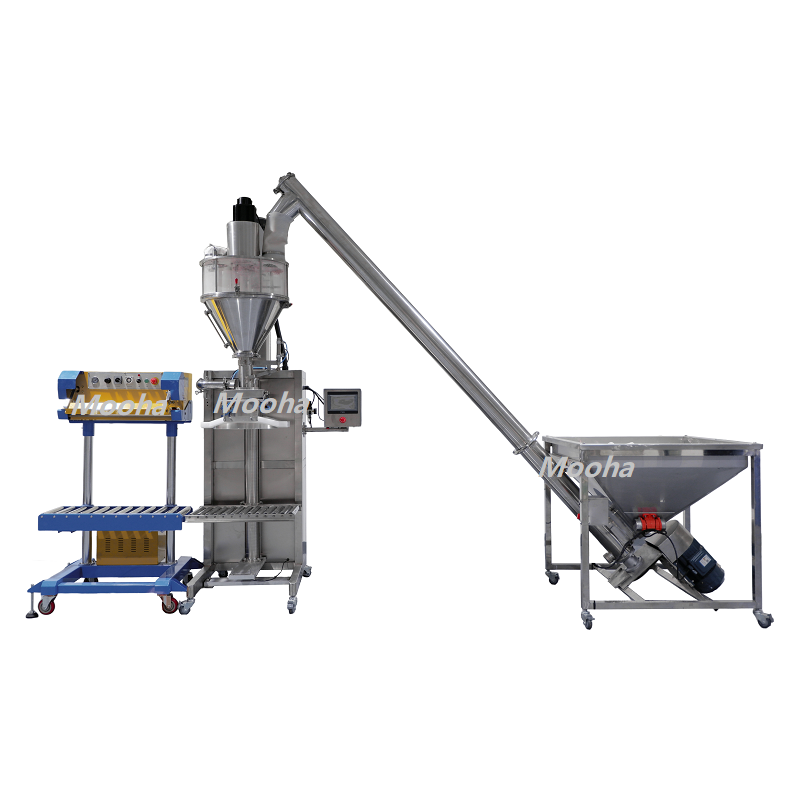
A standard packaging machine simply drops the product from a height and hopes for the best. In stark contrast, a specialized system is meticulously designed to manage the turbulent physics of air displacement.
When a kilogram of dense material rapidly enters a confined sack, an equal volume of air must aggressively exit. An uncontrolled exit results in a localized explosion of particles. Modern lines utilize enclosed auger fillers that keep the product heavily shielded from ambient air currents until the exact millisecond it enters the sack. By integrating sophisticated servo-driven motors, the machinery dictates the precise velocity of the product drop. This controlled descent prevents the violent splash effect that occurs when heavy materials slam into the bottom of an empty sack.
| Feature | Standard Packaging Machine | Engineered Dust-Control System |
|---|---|---|
| Bag Clamping | Manual or basic mechanical grip; leaves gaps. | Pneumatic clamps with inflatable rubber seals for an airtight lock. |
| Air Displacement | Unmanaged; air escapes freely into the room. | Active vacuum extraction hoods capture dirty air instantly. |
| Drop Distance | Fixed high drop; causes severe product splashing. | Submerged bottom-up filling minimizes free-fall distance. |
| Material Transfer | Open-belt conveyors introduce air and static. | Enclosed vacuum feeding de-aerates product before filling. |
How exactly does the machinery halt fugitive particles right where the packaging opens? The answer lies in highly coordinated mechanical interventions utilized within a premium powder bag filling line.
Pneumatic Bag Clamps and Inflatable Seals: The spout of the filler must form an absolute airtight seal with the packaging. Heavy-duty pneumatic clamps grip the exterior tightly. Simultaneously, inflatable rubber collars expand outward to fill any microscopic gaps in the neck. This ensures absolutely nothing escapes from the top during the high-speed drop.
Dust Extraction Hoods and Plenums: Positioned immediately around the filling spout, specialized vacuum hoods actively suction away the displaced dirty air as the material drops. This captured material is routed to a central collection system or filtered directly back into the primary hopper for reprocessing.
Bottom-Up Filling: When handling ultra-fine materials like talc or toner, the dispensing spout plunges to the very bottom of the empty sack. As the volume increases, the spout slowly retracts upward. This ingenious method keeps the drop distance to an absolute minimum. It effectively smothers the product and prevents clouds from ever forming.
Effective containment begins much earlier at the bulk supply source. How you transport raw materials into the dosing machine dictates how turbulent the final fill will be. Traditional bucket elevators constantly agitate the product. They introduce unwanted air and generate static-charged dust before the packaging phase even begins.
Upgrading your transfer method eliminates this friction entirely. Implementing a vacuum feeder powder bag line drastically minimizes airborne particles. Utilizing negative pressure, advanced transfer systems suck the raw material from your bulk supply directly into the hopper via a completely enclosed tube. For example, industrial systems designed to handle a versatile 500g to 50kg filling range rely heavily on vacuum integration to maintain consistent density. Vacuum-based transfers naturally extract excess air from the material during transit. This de-aeration process makes the product significantly denser and less prone to flushing.
Experienced operators know that fine, sticky, or highly aerated substances require highly specific mechanical configurations. Baking ingredients tend to clump together or form stubborn bridges inside the holding hopper. If a dense bridge collapses suddenly, it forces a massive unpredictable puff of air and debris out of the bag opening.
To combat this, specialized agitators are deployed. A dedicated flour powder filling sealing line demands distinct calibration compared to machinery handling dense granular chemicals. Equipment optimized for 3kg to 5kg retail coffee or flour bags uses customized slow-speed agitator blades inside the hopper. These blades keep the material flowing smoothly into the auger. Furthermore, for strict food-grade applications, the entire dispensing and sealing station is frequently housed inside a transparent polycarbonate enclosure. This physical barrier contains stray particles and maintains a sterile washdown-ready environment.
If you are at the critical decision stage of purchasing new capital equipment, you need concrete standards to evaluate which system will best combat your containment issues. Stop looking at generic features and focus on these engineering parameters:
Assess Material Flowability: Is your product free-flowing like granulated sugar, or non-free-flowing like milk powder? Non-free-flowing substances almost always necessitate bottom-up filling capabilities and aggressive vacuum extraction.
Evaluate Spout Technology: Standard open-mouth sacks require robust pneumatic side-clamps and overhead extraction hoods. Valve bags demand specialized spouts equipped with expanding inflatable seals to prevent dangerous blowback.
Demand Tool-less Maintenance: A superior containment system must be easy for maintenance crews to dismantle. Prioritize designs offering tool-less removal of auger screws and extraction hoods. This drastically minimizes downtime during routine product changeovers.
Calculate True ROI: When justifying the upfront investment, factor in the hidden money saved. Calculate the value of reduced product waste, fewer rejected thermal seals, and significantly lower daily housekeeping labor costs.
Effectively controlling fugitive particulates at the bag opening is an absolute prerequisite for achieving pinpoint fill accuracy, hermetic bag seals, and a rigorously safe working environment. By leveraging enclosed dosing architecture, pneumatic clamping, active extraction hoods, and submerged bottom-up filling technology, modern packaging infrastructure tackles the root cause of airborne contamination. Investing in the correct automated equipment will dramatically reduce invisible product waste and boost your overall operational profitability. If your facility is struggling with messy hazardous packaging processes, it is time to upgrade. Evaluate your production needs and select a high-performance system from a trusted manufacturer like Shmooha to ensure total containment and seamless operation.
Particulates that settle on the inner plastic lips of the packaging prevent the heat sealer jaws from melting the layers together evenly. This microscopic interference creates tiny channels in the seal, ultimately leading to a loss of vacuum pressure, rapid product spoilage, and messy leaks during pallet transit.
Yes, absolutely. Vacuum-based feeders are highly recommended for ultra-fine materials because they transport the product through completely enclosed piping using negative pressure. This enclosed transit prevents the raw material from ever mixing with ambient factory air, drastically reducing airborne particle creation long before the product even reaches the bagging station.
Bottom-up filling is an advanced dispensing process where the main nozzle is mechanically lowered to the very bottom of the empty sack before releasing any product. As the sack fills, the nozzle slowly rises in tandem with the product level, keeping the drop distance to an absolute minimum. This effectively smothers the material, preventing it from free-falling through the air and generating turbulent clouds.
While the fundamental physics of filling remain similar, a food-grade line is specifically constructed to strict sanitary standards, often utilizing polished 304 or 316 stainless steel to prevent bacterial growth. It also features customized agitators to prevent clumping, which is notoriously common with baking ingredients. In contrast, chemical lines heavily prioritize rugged explosion-proof electrical components to safely handle volatile and reactive dusts.
Excessive airborne debris is typically caused by three primary culprits. These include a drop distance that is far too high, a lack of airtight mechanical clamping at the spout, or completely unmanaged air displacement. Upgrading your current setup to include active vacuum extraction hoods and proper pneumatic neck clamps will immediately resolve these hazardous issues.
Dust is primarily generated by rapid air displacement. When a solid volume of powder drops into a confined bag, an equal volume of air must escape. If the powder falls from a significant height or flows too quickly, it creates severe turbulence. This turbulence catches the finest particles and forces them out of the bag opening as a suspended cloud.
Controlling dust requires a multi-layered approach starting at the source. First, utilize enclosed feeding systems like vacuum conveyors to prevent powder from contacting ambient air. Second, deploy bagging machines equipped with pneumatic clamps and active dust extraction hoods at the spout. Finally, ensure the room has adequate HVAC filtration to capture any residual microscopic particles that escape the primary containment systems.

