
English 


Views: 0 Author: Site Editor Publish Time: 2026-07-30 Origin: Site


Transitioning to automated packaging requires balancing speed, accuracy, and product integrity. You upgrade aging lines to meet demand without sacrificing quality. For granular items like coffee beans, nuts, and extruded snacks, vertical form-fill-seal technology shines. It offers an excellent ratio of footprint to output. However, generic solutions rarely fit unique product behaviors. Granules flow unpredictably based on density and moisture. We provide production managers and procurement teams an evidence-based framework. You will learn how to specify components accurately. We explore evaluation criteria to secure the right equipment. You can avoid overspending on unnecessary features. You will also learn to avoid under-speccing critical components. This guide unpacks exact technical parameters. You will discover how different filler mechanisms affect outcomes. We show you precisely what matters most for granular solids.
Dosing dictates accuracy: The choice between volumetric cups and multi-head weighers fundamentally impacts giveaway rates and product breakage.
Product-specific configurations are non-negotiable: Coffee requires degassing and modified atmosphere packaging (MAP), while fragile snacks demand low-drop configurations and static control.
Vendor evaluation requires stringent testing: Demand a Factory Acceptance Test (FAT) using your actual product and film structures before sign-off.
Before you specify components, you must validate the equipment category. Many teams jump straight into technical features. They forget to assess if their chosen architecture aligns with facility realities. Gravity dictates the movement of free-flowing items. Therefore, leveraging gravity makes mechanical sense.
Vertical systems form bags directly from flat rollstock film. You pull the film over a forming collar. This approach reduces per-bag material costs by up to 30%. You save significantly compared to buying premade pouches. Premade pouches demand complex feed systems. They often misfeed or jam. There is a minor trade-off. You get slightly less flexibility for ultra-premium pouch shapes. However, modern formers easily create quad-seal and gusseted bags. A vertical granule bagger keeps inventory simple. You store rolls of film instead of pallets of empty pouches.
Horizontal form-fill-seal (HFFS) machines require a massive factory footprint. They drag products horizontally along a belt. They work brilliantly for single solid items. Think of candy bars or trays of baked goods. However, they struggle with free-flowing granules. Granules bounce and scatter during horizontal acceleration. You waste product. You contaminate the seal zone.
A granule VFFS packaging machine remains the industry standard. It relies on gravity to feed free-flowing solids. You achieve high throughput. You maximize efficient floor space utilization. Floor space is expensive. Expanding a warehouse footprint causes massive headaches. Vertical alignment utilizes vertical airspace instead.
| Machine Type | Primary Orientation | Best Suited For | Footprint Impact |
|---|---|---|---|
| VFFS | Vertical (Gravity-fed) | Granules, powders, short-cut pasta | Compact (Tall) |
| HFFS | Horizontal (Belt-fed) | Single solids, bakery items | Expansive (Long) |
| Premade Pouch | Rotary or Inline | Heavy liquids, premium unique shapes | Moderate to Large |
The chart above illustrates basic architectural differences. You can see how vertical alignment favors granular items. Gravity forces the product straight down into the forming tube. You avoid lateral scattering entirely.
You must target zero underweight bags. Regulatory bodies penalize underweight shipments severely. Conversely, you should minimize product giveaway. Overfill represents lost profit. You want giveaway rates below 1%. Achieving this depends entirely on your dosing mechanism.
These units measure volume rather than physical mass. They utilize adjustable cups mounted on a rotating plate. They drop a specific volume of product into the bag.
Pros: They are highly cost-effective. They require very simple maintenance. They operate at high speeds. Mechanics understand them easily.
Cons: They cannot detect weight variations. Product density shifts often. Humidity changes how products settle. When density changes, volume stays the same. Thus, your final weight fluctuates.
Application: They work perfectly for highly uniform commodities. They suit durable items like rice or lentils. You can integrate them into a reliable grain packaging machine easily.
Limitation: Do not use them for mixed items. Trail mix components separate by weight. You will get inconsistent ratios. High-value coffee also requires exact precision.
These systems represent the pinnacle of modern dosing. They utilize multiple independent weigh hoppers. A computer calculates the perfect combination of hoppers to hit the target weight.
Pros: They deliver extreme accuracy. You often hit targets within 0.1g to 1g. They handle irregular shapes perfectly. They manage mixed products seamlessly.
Cons: They demand a higher initial capital expenditure. They require significant vertical height clearance. Sanitation takes more time due to multiple buckets.
Application: They are the mandatory choice for an advanced snack packing machine. Premium roasteries rely on them entirely. They protect your profit margins.
Explain the math simply. If you overfill each bag by two grams, it adds up. Over a thousand bags, you lose two kilograms. Over a year, this destroys profit margins. That highlights exactly why dosing matters.
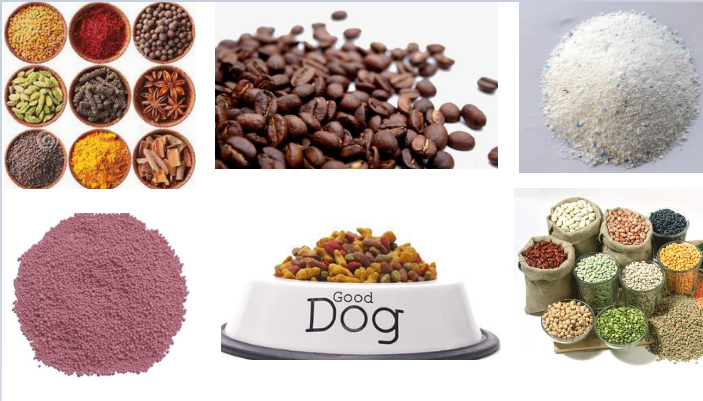
You must map machine features to desired outcomes. Different products behave differently inside the forming tube. You must adapt the equipment to the product behavior.
Whole beans off-gas significantly after roasting. You must manage this gas carefully.
Freshness Retention: You must integrate a one-way degassing valve applicator. The valve lets carbon dioxide escape. It prevents ambient air from entering. Without it, your bags will inflate and burst. The machine ultrasonically welds it to the film.
Oxygen Displacement: You require Nitrogen Flushing capabilities. This is Modified Atmosphere Packaging (MAP). Nitrogen pushes residual oxygen out. You must drop oxygen levels below 1-2%. This extends shelf life dramatically.
Static Control: Coffee dust generates intense static electricity. Beans rub against the metal forming tube. Static pulls dust into the sealing jaws. You get weak seals. Anti-static bars neutralize this charge. A proper coffee bean packing machine includes these modules standard.
Snacks are incredibly fragile. You must treat them delicately during the packaging cycle.
Breakage Prevention: You require specialized transfer chutes. You need angled formers. You must minimize drop heights. Gravity helps, but too much speed causes shattering. You lose product integrity.
Seal Integrity: Chips leave crumbs. Salt and oil coat the inner film. Crumbs in the seal zone cause leaks. Leaks destroy freshness. Look for stripper plates. They clear the seal area before the jaws close. Consider ultrasonic sealing options. Ultrasonic waves push through contaminants easily.
Bag Volume/Air Cushion: Snacks need protection during transit. You need precise air injection. This creates a protective pillow effect. The bag acts as a shock absorber. However, too much air causes bursting at higher altitudes. You must calibrate the injection carefully.
Market demands shift constantly. You must evaluate how the equipment adapts to these changes over time.
You must assess tool-less former changes. Operators need quick transitions. A format change should take a single operator less than 15 minutes. For example, moving from a 250g bag to a 1kg bag should feel seamless. You cannot afford hours of downtime. Mechanical adjustments should use quick-release levers.
Packaging materials evolve rapidly. Ensure the sealing jaws handle modern structures. Eco-friendly films are increasingly popular. You might run monomaterial recyclables or compostables. These films have narrower sealing temperature windows. They melt or burn easily. Traditional laminates are forgiving. New films demand precise thermal control. Your granule pouch packaging machine must adapt to strict thermal limits.
You need transparency. Demand non-proprietary PLCs. Look for systems like Allen-Bradley, Siemens, or standard Omron. They provide intuitive human-machine interfaces. Avoid locked-down, proprietary control boards. They limit your options. You become dependent on the original vendor for every minor update. Standard PLCs allow third-party maintenance. You protect your operation from vendor bottlenecks.
Manufacturers love quoting dry cycle speeds. Dry cycling means running the machine empty. It ignores real-world friction. It ignores product settling times. Request OEE (Overall Equipment Effectiveness) estimates instead. Base these estimates on your specific dosing system and film type. Real throughput accounts for seal cooling times. It factors in bag deflation. It considers actual operator loading speeds. A fast machine producing leaky bags has terrible OEE.
Procurement does not end with a purchase order. You must manage the physical integration carefully.
The packaging machine does not operate in a vacuum. It connects to an entire ecosystem. Verify handshake protocols. These are the input and output signals between machines. Upstream bucket elevators must know when to pause feeding. Downstream equipment relies on steady pacing. You must sync the bagger with checkweighers. Metal detectors need proper spacing. Rotary accumulation tables must spin at matched rates. If signals fail, bags pile up and crash.
This is your primary defense against failure. Never accept delivery without a recorded FAT. Follow this standard testing protocol:
Send your specific products and actual rollstock film to the manufacturer.
Require the vendor to run the machine at contract speed.
Monitor the operation continuously for at least one hour.
Inspect the sealed bags for leaks, wrinkles, or jamming issues.
Watch for jamming. Inspect the bags closely. If it fails the FAT, do not authorize shipment. Demand corrections immediately.
Evaluate the vendor's domestic parts inventory. A cheap machine is tempting. It might save you money upfront. However, it becomes a massive liability later. Servo motors control jaw movements. They provide precise pressure. Imagine a servo motor fails on a Tuesday. If a replacement takes three weeks to ship internationally, you lose thousands. Local support ensures rapid recovery.
Selecting the right automated equipment requires deep analysis. You must move past surface-level speed claims. You need to evaluate precise interactions. Understand how your product behaves. Analyze the dosing mechanism carefully. Test the film structure rigorously.
Prioritize multi-head weighing for high-value or fragile items. Insist on application-specific features. Coffee needs valves and nitrogen. Snacks need drop-mitigation and clean seals. Anchor your purchase decision on verifiable FAT performance. Do not rely on glossy brochure specifications. Real-world testing proves actual capabilities.
Document your target bag sizes clearly. List your required bags per minute. Measure your facility height restrictions accurately. Then, request a detailed performance evaluation. Ask shortlisted vendors for test-run proposals. You will secure a system that truly elevates your production capacity.
A: With routine preventative maintenance, a high-quality VFFS machine operates reliably for 10 to 15 years. Wear parts like sealing jaws, cutting knives, and belts require regular replacement. However, the core frame and PLC should offer long-term durability.
A: Yes, but it requires specific mechanical assemblies. You will need gusseting devices and distinct flat-bottom formers. Ensure you specify all desired bag styles during the quoting phase, as retrofitting can be complex and expensive.
A: Because the product must drop via gravity from the weigher through the forming tube, standard setups often require 12 to 16 feet (3.6 to 4.8 meters) of vertical clearance. Low-profile configurations exist but may compromise throughput.

