
English 


Views: 0 Author: Site Editor Publish Time: 2026-07-16 Origin: Site


Liquid medicine packaging involves exceptionally high stakes for pharmaceutical manufacturers. Inaccurate dosing during the filling stage poses severe risks. Cross-contamination also threatens production integrity. These errors often lead to regulatory non-compliance. They trigger product recalls and cause devastating financial losses. Many assume viscosity and production speed are the only crucial factors. In reality, specific bottle volumes dictate the necessary pump technology. Volume requirements also determine handling mechanisms and capping configurations. Managing a 5ml vial requires vastly different equipment than processing a large 500ml syrup bottle.
We offer a clinical, decision-focused framework for plant managers and purchasing engineers. You will discover how to thoroughly evaluate an oral liquid filling machine based on exact volume needs. This guide equips you to make sound technical decisions. It helps you minimize implementation risks effectively.
Volume drives pump selection: Micro-doses (under 30ml) require peristaltic or ceramic piston pumps for tight tolerances, while larger volumes (up to 500ml+) rely on pneumatic piston or mass flow meters.
Integration matters: A continuous oral liquid bottling line reduces cross-contamination risks but requires synchronized capping and labeling stations to prevent bottlenecks.
Compliance is non-negotiable: Any shortlisted liquid medicine filling machine must support strict GMP standards, including verifiable CIP/SIP (Clean-In-Place / Sterilize-In-Place) capabilities and 316L stainless steel contact parts.
A universal machine does not exist in pharmaceuticals and nutraceuticals. Trying to process a 10ml vial and a 250ml bottle on the same un-optimized line causes severe issues. It leads directly to dosage inconsistency. Operators also experience excessive splashing. You must establish strict architectural parameters before evaluating vendors.
We recommend defining clear success criteria early in the process. You must establish measurable targets for your production line to ensure consistent output.
Acceptable Fill Tolerance: Aim for ±0.5% to ±1% variation depending on the active pharmaceutical ingredient.
Target Parts-Per-Minute (PPM): Define your minimum throughput requirements for each specific container size.
Acceptable Changeover Duration: Specify the maximum allowed downtime when switching container sizes between batches.
The equipment must manage the complex interplay between target volume and liquid behavior. Thin aqueous solutions flow differently compared to dense suspensions. Thin aqueous solutions like homeopathic remedies flow rapidly. They demand delicate flow control mechanisms. Dense suspensions require powerful stroke forces. High-volume runs of thick liquids demand robust pumping. Low-volume runs of thin liquids demand delicate flow control. You must map these variables accurately. A mismatch here ruins production efficiency. It causes excessive wear on pump seals and increases maintenance delays.
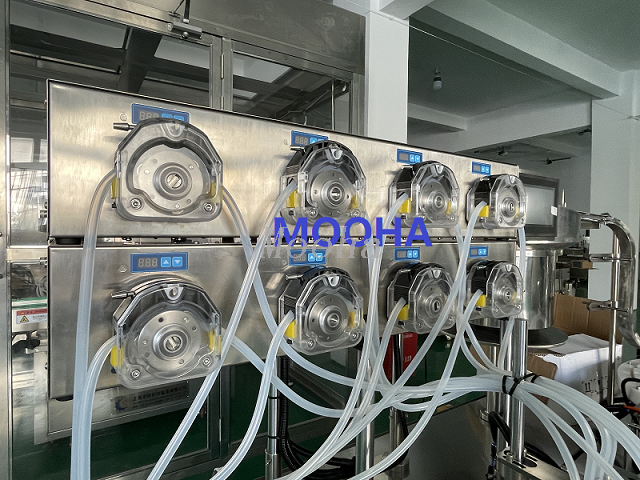
We categorize these solutions as highly engineered systems for tiny increments. A minor 0.2ml error represents a massive dosage failure. Such errors jeopardize patient safety and violate regulatory limits.
We highly recommend integrating a monoblock filling machine for these micro-volumes. This architecture minimizes the physical footprint on your production floor. It handles unstable, lightweight vials seamlessly. The system controls the container continuously from filling through capping. You might need a dedicated 10ml bottle filling machine configuration for specific products. These include eye drops, essential oils, or highly concentrated oral drops.
Pump technology remains the most critical decision node here. You have two primary options for micro-dosing precision.
Peristaltic Pumps: These pumps ensure maximum sterility. The fluid only touches the medical-grade tubing. Peristaltic pumps rely on rollers squeezing flexible tubes. This action pushes the liquid forward gently. They allow exceptionally quick product changeovers. Operators simply swap the tubing pathway.
Ceramic Rotary Piston Pumps: These offer ultra-high precision. They provide immense durability during continuous high-speed runs. Ceramic rotary piston pumps use a valveless design. They rotate and reciprocate simultaneously. This dual action draws and dispenses fluid with absolute precision. Ceramic parts resist abrasive liquids exceptionally well. They resist wear and maintain accuracy over millions of cycles.
You must address specific implementation risks in this volume range. Lightweight glass or plastic vials tip over easily on standard conveyors. Ensure your vendor specifies star-wheel indexing mechanisms. Puck systems also provide excellent stability for narrow containers.
Best Practices for Micro-Dosing: Always calibrate pumps at the exact operating temperature of the liquid. Temperature fluctuations alter fluid density slightly. This alters the final dosed volume.
Common Mistakes: Many buyers ignore vial stability. They purchase linear conveyors for 5ml vials. This causes frequent tipping, jams, and costly glass breakages.
Larger volumes require equipment built for substantial throughput. They must handle higher-viscosity liquids flawlessly. You want to avoid foaming, splashing, or dripping during the fill cycle. You might evaluate a specific syrup filling capping machine for high-demand products. Common applications include pediatric medicines, cough syrups, or dietary liquid supplements.
Pump technology shifts significantly as volume increases. Micro-dosing pumps cannot deliver 500ml efficiently.
| Pump Type | Best Suited For | Key Advantage |
|---|---|---|
| Volumetric Piston Fillers | Handling thick, dense syrups accurately. | Provides consistent force regardless of viscosity changes. |
| Flow Meters (Mass or Magnetic) | Larger volumes requiring highly sanitary setups. | Features crevice-free internal pathways for easy cleaning. |
You must carefully evaluate the nozzle design. This evaluation dimension separates average machines from excellent ones. Your equipment must include diving nozzles. These nozzles descend into the bottle before dispensing. They rise slowly as the liquid level increases. This bottom-up filling technique prevents aeration. It stops foaming in larger bottles completely.
What to Watch Out For: Syrups often contain high sugar content. Sugar crystallizes around nozzle tips during machine pauses. Specify anti-drip nozzle designs. They prevent crystallized buildup and maintain clean bottle threads. Clean threads ensure proper sealing later down the line.
Filling only solves half the production battle. Your capping station must match the exact throughput of the filler. It cannot apply incorrect torque under any circumstances. Wrong torque damages the thread. It also causes containers to fail leak tests.
We see several standard capping variations in pharmaceutical packaging. Each mechanism targets a specific container style.
ROPP (Roll-On Pilfer-Proof) Cappers: These serve as the industry standard for aluminum caps on syrup bottles. The machine requires specific threading pressure to form the cap threads precisely onto the glass.
Screw Cappers: These utilize servo-driven mechanisms for plastic closures. Servo motors allow precise, adjustable torque control. They prevent over-tightening on delicate plastic threads. Modern screw cappers feature magnetic clutches. Some advanced units use electronic servo feedback. These systems monitor torque output continuously. They reject bottles automatically if torque falls outside predetermined limits.
Crimping Systems: These secure aluminum seals on small glass vials securely. They provide tamper-evident packaging for critical medicines.
Your shortlisting logic should prioritize seamless integration. Insist on vendors supplying a fully integrated oral liquid bottling line. Avoid cobbling together disparate filling and capping units from different manufacturers. Mixed units frequently trigger integration software failures. They create synchronization bottlenecks.
Best Practices for Capping Integration: Always demand a unified control panel. One human-machine interface should govern both filling and capping parameters. This simplifies troubleshooting significantly for your operators.
Regulatory bodies enforce strict manufacturing rules globally. The FDA and EMA require strict adherence to cGMP guidelines. You cannot compromise on these authoritative criteria. Every liquid medicine filling machine must meet exacting sanitary standards.
You must verify several key validation features during procurement. All wetted parts must consist of 316L surgical-grade stainless steel. FDA-approved polymers also work for specific flexible components. Manufacturers must polish all welds to a precise Ra value. This value typically needs to be ≤ 0.4 µm. Smooth surfaces prevent bacterial harboring entirely.
Most liquid packaging occurs in classified cleanroom environments. The machine design must minimize flat surfaces. Slanted surfaces allow washing fluids to drain quickly. Dead legs in piping systems trap stagnant product. You must eliminate all dead legs during the design phase.
We emphasize evidence-oriented requirements heavily. The manufacturer must provide comprehensive Factory Acceptance Testing (FAT) documentation. You should witness these tests before the machine ships.
Furthermore, demand full execution support for validation protocols.
Installation Qualification (IQ): Verifies proper installation of all components according to specifications.
Operational Qualification (OQ): Confirms the machine operates within prescribed functional limits.
Performance Qualification (PQ): Demonstrates the machine produces consistent results under real-world production conditions.
Common Mistakes: Skipping rigorous clean-in-place verification causes disastrous audit failures. Always verify the spray balls reach every internal chamber.
Your real hidden challenge lies in production downtime. Product changeovers consume massive amounts of valuable time. Switching from a 30ml bottle to a 100ml bottle halts production completely. You must mitigate these implementation risks proactively.
Look specifically for tool-less changeover designs. Operators should adjust guide rails manually without wrenches. They should swap star-wheels using quick-release pins. This dramatically reduces downtime between batches.
You must also verify the reality of the vendor's recipe recall system. Inspect the human-machine interface closely. Does it genuinely adjust servo positions automatically? Or does it still require manual wrenching by your technicians? True automated changeovers save hundreds of hours annually.
Clean-in-place sequences also impact changeover times. Automated wash cycles clean internal pathways rapidly. Manual tear-downs require hours of labor. Invest in automated cleaning to maximize equipment uptime.
Inadequate operator training presents another major adoption risk. Complex machinery overwhelms untrained staff quickly.
Risk Mitigation Steps:
Ensure the procurement contract includes comprehensive on-site commissioning.
Secure dedicated, hands-on training for your maintenance staff.
Request detailed video tutorials from the manufacturer for future reference.
Well-trained operators detect minor deviations early. They resolve small issues before they become catastrophic line stoppages.
Selecting the right machine requires a strict logical process. You must map specific bottle volumes directly to appropriate pump technology. A solid decision framework prevents costly production bottlenecks later.
Ensure the capping system integrates seamlessly. Verify GMP compliance meets baseline regulatory standards without exception. Taking shortcuts on sanitary design leads to inevitable recall scenarios.
Focus on these actionable next steps to advance your project safely:
Compile a comprehensive specification matrix of your liquid properties.
Document exact bottle volumes and target parts-per-minute clearly.
Demand tool-less changeover demonstrations from all shortlisted manufacturers.
Require vendors to run a performance test using your actual product and bottles before final sign-off.
A: Volumetric piston pumps are typically the most reliable for thick syrups, providing consistent force and high accuracy regardless of the liquid's thickness. They handle dense suspensions effortlessly without clogging or losing dosage precision during long runs.
A: While technically possible with interchangeable pumps and extensive change parts, it is highly inefficient. The massive changeover time and compromised accuracy usually make it more cost-effective to have dedicated lines for micro-doses and large volumes.
A: A monoblock system integrates filling, plugging, and capping on a single chassis using a star-wheel mechanism. It is ideal for small volumes (under 50ml) where space is tight and small bottle stability is critical.
A: Specify diving nozzles that fill from the bottom up, keeping the nozzle tip just below the liquid level as the bottle fills. Combine this approach with adjustable pump speeds to ensure a smooth, foam-free dispensing cycle.

