
English 


Views: 0 Author: Site Editor Publish Time: 2026-10-15 Origin: Site


Walk onto any production floor. A fine dusting of expensive nutritional supplement coats the conveyor belt. The control panel flashes an error code. Product waste and machine downtime caused by misaligned containers represent a massive pain point in dry packaging operations. Whether running a high-speed automated line or a localized setup, the precision of a powder filling machine relies entirely on exact container positioning. If the bottle is not perfectly aligned beneath the dispensing nozzle, you risk immediate spillage. Dosing becomes wildly inaccurate. Sealing surfaces get heavily contaminated. Mastering these mechanical nuances is non-negotiable. This guide details how to perform rigorous container positioning checks. We will focus on maximizing efficiency, drastically reducing waste, and protecting your operational bottom line.
Unlike liquids that naturally flow and settle evenly, dry particulates require direct and dead-centered dispensing. This is especially true for ultra-fine or dusty powders. If the drop is even slightly off-axis, the powder bridges or cascades down the outside of the container. A misaligned bottle inevitably leads to powder building up on the bottle lip. It fails to settle inside the cavity. This fundamentally skews the final target weight. Furthermore, spilled powder resting on the neck threads ruins the integrity of the cap seal. This seemingly minor mechanical drift frequently leads to product spoilage. It compromises shelf life and causes costly rejections during final quality control inspections.
Recent industry analyses highlight a dramatic shift toward intelligent and vision-guided verification. Packaging tolerances are becoming increasingly strict. Manufacturers are desperate to combat product giveaway and ensure regulatory compliance. Consequently, reliance on purely mechanical stops is fading. Modern facilities rapidly adopt smart sensors. These devices do more than detect the presence of a container. They verify exact dimensional alignment down to the millimeter before initiating a fill. This technological evolution underscores a critical reality. Routine positioning checks are more vital than ever for production managers evaluating a powder bottle filling machine. Maintaining competitive Overall Equipment Effectiveness demands proactive sensor management.
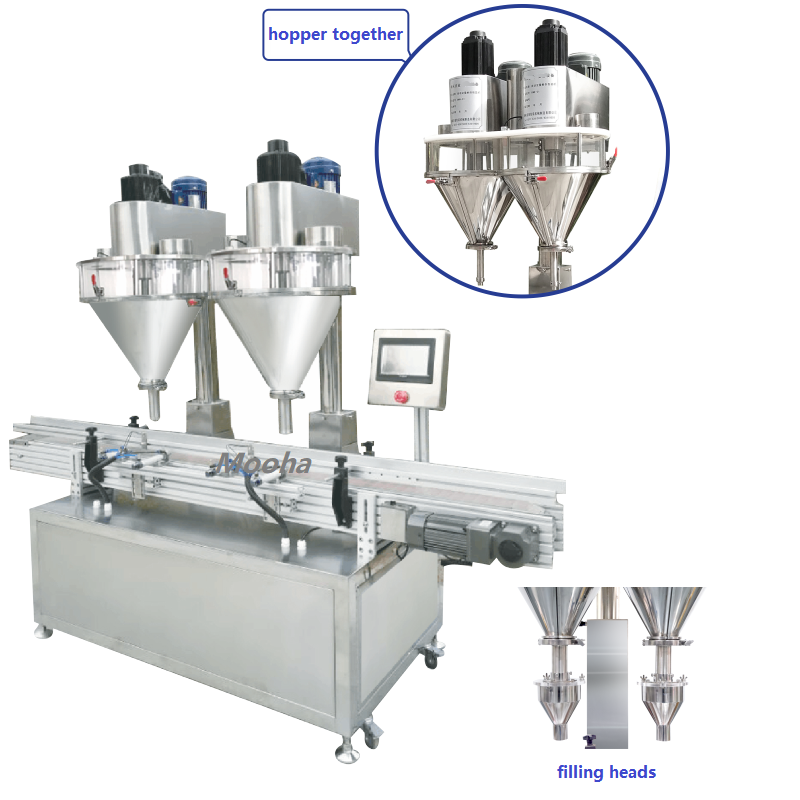
Indexing systems act as the traffic controllers of your packaging line. They utilize pneumatic stop cylinders or precisely machined timing screws. These mechanisms pause the rushing stream of bottles at exact intervals. They isolate a single container for the impending dose.
High-speed rotary setups rely heavily on custom-machined star wheels. These rotating discs feature scalloped cutouts designed to securely hug bottles of specific diameters. They sweep containers seamlessly through the filling cycle without a millimeter of unwanted lateral movement.
Dealing with lightweight PET plastics or uniquely contoured shapes requires specialized grip. Pneumatic grips become crucial in these scenarios. They firmly stabilize the base or neck of the container. This ensures the bottle does not tip over from the sudden downward force and vibration of the auger dispensing heavy powder.
Acting as the eyes of the operation, photoelectric sensors shoot beams of light to detect the exact location of the bottle. They are responsible for the critical safety feature known as no bottle, no fill. This signals the programmable logic controller to trigger the auger only when the target is perfectly locked in place.
Before powering up the main drive, manually cycle the machine at a crawl. Observe the filling nozzle as it descends. It must align perfectly with the absolute dead-center of the bottle opening. Adjust the lateral guide rails carefully. They should gently cradle the specific width of the current bottle run without causing friction that might induce a jam.
Powder packaging environments are inherently dusty. Grab an anti-static microfiber cloth. Gently wipe down all optic sensor lenses. Once clean, wave a sample bottle in front of the beam to trigger the sensor manually. Listen for the subtle click of the relay or watch the control screen. Ensure the signal is received instantaneously without any lag.
Check your main air regulator. Ensure the pneumatic pressure matches the recommended levels. If the pressure is too low, indexing cylinders will react sluggishly. In contrast, if it is too high, the clamps might crush fragile plastic containers or forcefully eject them from the conveyor.
Never assume the setup from yesterday works for today. Physically confirm that the correct star wheel or timing screw is bolted into place. Verify it matches the specific bottle volume and diameter scheduled for the current shift.
Adapting to packaging variations is an ongoing battle on the factory floor. Specifically, switching between clear glass, frosted plastic, or opaque high-density polyethylene containers demands immediate attention. Sensors must be recalibrated because different materials reflect light in vastly different ways. A setting that flawlessly detects a white plastic jar might completely ignore a transparent glass bottle.
Furthermore, operators must closely monitor the timing of the auger drop. There is a critical micro-second link between the positioning sensor and the auger drive. The powder release must initiate exactly when the bottle settles into its final resting state. Triggering a fraction of a second early causes a dusty mess. Triggering too late slows down the entire line. If your system utilizes bottom-vibration plates to settle fluffy powders, verify that the vigorous shaking does not cause the bottle to slowly drift out of its centered alignment.
Imagine a scenario where the conveyor belt runs just a fraction faster than the indexing star wheel. This speed mismatch causes bottles to bunch up and violently tip over. The solution involves adjusting the variable frequency drives. You must perfectly synchronize the conveyor belt speed with the indexing mechanism. Additionally, ensure guide rails are not set too wide.
If product consistently misses the cavity and piles up on the threads, the nozzle height is likely set too high. This allows cross-breezes to blow the powder off course. Alternatively, the bottle is stopping slightly off-center. Lower the dispensing nozzle closer to the opening. Recalibrate the photoelectric stop sensor to adjust the braking time.
When the machine suddenly dispenses a dose of powder onto an empty conveyor belt, you are experiencing ghost triggering. The usual culprit is heavy dust buildup blinding the sensor. Sometimes the sensitivity dial is simply cranked too high. Clean the lens thoroughly and dial back the sensitivity. Strongly consider installing an active dust-extraction hood near the nozzle.
Transitioning from troubleshooting to system design requires matching the right machine to your specific positioning needs. Abstract concepts must translate into actionable selection standards. Understanding the core differences in machinery helps pinpoint exactly what your production line requires.
| Equipment Type | Target Weight Range | Core Positioning Mechanism | Ideal Application Scenario |
|---|---|---|---|
| Desktop Auger Filler | Up to 200g | Manual V-block guide rail push | Laboratory testing, startup low-volume runs |
| Double Head Bottling Machine | 10g to 5kg | Servo-driven indexing and star wheels | High-speed automated packaging lines |
| Valve Bag Packaging Machine | Up to 50kg | Pneumatic horizontal spout clamp | Heavy industrial bagging, cement, chemicals |
For small-scale laboratories or startup operations, a desktop powder auger filler offers an ideal entry point. These semi-automatic units handle weights up to 200g. Because they lack automated conveyors, positioning relies entirely on the operator. The operator physically pushes the container against a stationary V-block guide rail before depressing a foot pedal.
In contrast, high-volume production demands automated precision. A double-head powder bottling machine handles a massive range from 10g to 5kg. These systems utilize dual augers and servo-driven indexing to maintain perfect container alignment at high speeds. The dual-head setup allows for a bulk fill followed by a precision top-off fill. This guarantees strict weight accuracy without sacrificing throughput.
On the heaviest end of the industrial spectrum is the valve bag powder filler. Engineered for 50kg loads of cement or chemical additives, this machine changes the positioning logic entirely. Instead of dropping powder vertically into an open mouth, a flexible bag is horizontally sleeved onto a protruding spout. The critical positioning check involves ensuring the internal valve is fully seated. A pneumatic clamp must securely lock the bag onto the spout before the high-pressure fill begins.
A proactive approach to maintenance prevents minor mechanical drifts from becoming catastrophic jams. Daily maintenance should include wiping down all optical sensors. Use compressed air or vacuums to clear powder dust from the grooves of guide rails. Always check for loose mounting bolts on the indexing stops.
On a weekly basis, technicians should focus on lubricating pneumatic cylinder rods to prevent sticking. Inspect the edges of plastic star wheels for excessive wear and tear. Closely examine conveyor belts for stretching or fraying that could cause jerky bottle movement. Keep the machine software up to date. The logic controller acts as the brain governing the micro-second timing of the entire positioning sequence.
Even with meticulous maintenance, mechanical systems eventually reach the end of their operational lifecycle. Signs of failure include frequent bottle jams and wildly inconsistent fill weights despite recent auger calibration. Excessive product waste due to outdated mechanical positioning stops is a clear red flag.
When considering modern upgrades, look for systems equipped with servo-driven indexing. Unlike harsh mechanical stops, servos provide incredibly smooth acceleration and deceleration profiles. Advanced automated recipe-driven guide rail adjustments eliminate human error during changeovers. Upgrading to a modern system with superior container positioning pays for itself rapidly. It eliminates costly product giveaway and drastically reduces labor hours wasted on cleanup.
Container positioning serves as the undeniable foundation of accurate and highly efficient powder packaging. Even the most technologically advanced auger is rendered completely useless if the target receptacle is not in the exact right place at the exact right time. By moving away from reactive troubleshooting and embracing rigorous positioning checks, operators maintain peak performance.
Do not let misaligned bottles erode your profit margins. Evaluate your current setup against industry standards. We invite you to explore the latest advancements in high-precision packaging equipment. Visit Shmooha to find the perfect automated positioning solution tailored exactly to your production line.
The most common cause is a combination of improperly adjusted guide rails and dirty photoelectric sensors. When dust accumulates on the lens, the sensor fails to accurately detect the leading edge of the bottle. This causes the indexing mechanism to brake late and stop the bottle off-center.
Sensors must be physically wiped clean and checked daily for dust buildup. A full electronic recalibration of the sensor sensitivity is required anytime you change the bottle size, color, or material. Switching from a clear plastic jar to an opaque container mandates immediate recalibration.
Most desktop models are inherently semi-automatic and rely on manual placement by an operator. However, as production demands scale, they can often be retrofitted. You can mount them over a small motorized conveyor belt equipped with basic indexing sensors to automate the positioning and filling sequence.
It is a fundamental safety and efficiency interlock programmed into the machine logic controller. It actively prevents the auger drive from dispensing powder unless the positioning sensor positively confirms that a container is perfectly locked in place beneath the dispensing nozzle. This prevents massive powder spills.
A standard bottling machine drops powder vertically into a rigid open-top container using gravity and an auger. A valve bag filler requires a flexible enclosed bag to be horizontally sleeved onto a specialized spout. It relies on a secure expanding pneumatic clamp to hold the bag firmly in place during a highly pressurized fill.
Clear bottles allow standard photoelectric light beams to pass straight through them without reflecting a signal back to the receiver. To fix this, you must switch to an ultrasonic sensor or a specialized retro-reflective sensor designed specifically for transparent objects. Adjusting the sensitivity threshold can also help catch the slight refraction caused by clear plastics.
Aligning a star wheel requires loosening the main hub locking collar and manually rotating the wheel until the scalloped pocket perfectly centers the bottle directly under the filling nozzle. Once centered, retighten the collar and slowly jog the machine through a full rotation to ensure the bottle enters and exits the star wheel without catching on the guide rails.

