
English 


Views: 0 Author: Site Editor Publish Time: 2026-06-23 Origin: Site


Procuring a powder packaging system carries inherent risks. Powders shift behavior dramatically based on humidity, bulk density, and aeration levels. They behave completely differently from predictable liquids or uniform solids. These shifting variables make strict standardization surprisingly difficult.
A misaligned machine triggers chronic operational headaches. You will quickly face unacceptable weight variances. Operators will battle severe dust emissions daily. Frequent bridging in the hopper will disrupt steady flow. These combined failures inevitably lead to costly unplanned downtime.
This guide bypasses polished marketing claims entirely. We provide a strict, engineering-focused evaluation framework. You will learn to match machine technology to specific powder rheology accurately. We also cover evaluating container formats and optimizing production environments. Applying these principles ensures a verifiable return on your investment.
Powder Flow Dictates Equipment: The choice between auger, volumetric, or net weight fillers relies entirely on whether your powder is free-flowing or non-free-flowing.
Container Format Limits Speed: Bags, bottles, and cans require entirely different handling mechanisms (e.g., pick-fill-seal for pouches vs. indexing conveyors for rigids).
Hidden Costs Reside in Changeovers: Evaluate machines based on toolless tear-downs and clean-in-place (CIP) capabilities, not just maximum cycles per minute (CPM).
Demand Proof Before Purchase: Never finalize procurement without a Factory Acceptance Test (FAT) using your actual product and film/containers.
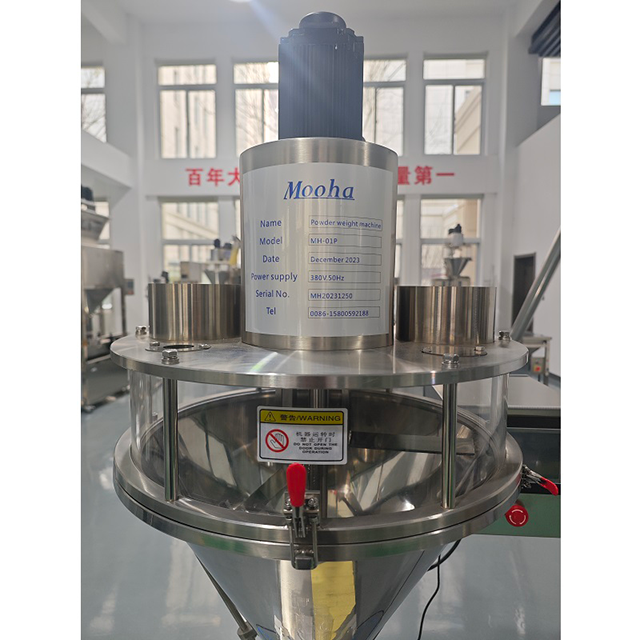
Operators frequently battle distinct physical hurdles during daily production runs. We call these the "suck" factors. Bridging represents the most common complaint. Particles interlock and form a solid arch over the dispensing funnel. This completely starves the filling mechanism beneath it. Ratholing poses another severe issue. The central powder column flows out properly, but stagnant material clings to the hopper walls. Finally, rampant dusting creates massive sanitation issues. Airborne particulate settles onto sealing jaws. Compromised seals ruin product integrity and reduce shelf life.
Powder rheology fundamentally dictates your equipment choice. You must classify your product correctly before reviewing machine specs. We divide powders into two primary categories.
| Powder Classification | Key Characteristics | Handling Requirements |
|---|---|---|
| Free-Flowing | Particles do not cohere. Examples include granulated sugar, table salt, and ground coffee. | Prone to rapid spilling. Requires mechanical flaps or gates to cut off flow sharply and cleanly. |
| Non-Free-Flowing | Particles clump and compact readily. Examples include baking flour, talc, and whey protein. | Requires forced extrusion mechanisms. Relies on internal agitation to maintain consistent density. |
Never attempt to evaluate machinery blindly. You must establish a baseline rule. Always obtain a comprehensive bulk density and flowability analysis of your specific product first. Engineers often use the Carr Index or Hausner Ratio to quantify flowability. These metrics predict how the material will behave under vibration and gravity. Accurate data prevents catastrophic equipment mismatches.
Understanding internal dispensing mechanisms guarantees better procurement decisions. You must align the dosing technology directly with your powder's physical properties. An unmatched system will never achieve stable accuracy.
This system utilizes a vertically rotating screw inside a tube. The screw dispenses a highly precise volume of material per revolution. It physically pushes the product downward. This forced extrusion makes it ideal for handling stubborn materials.
You should deploy an auger filler machine exclusively for non-free-flowing powders. Sticky or clumping products move efficiently through the flights. When evaluating these systems, scrutinize the drive motors. Always specify servo-driven augers. Servos deliver pinpoint rotational control for precise stopping. Furthermore, demand custom-tooled flighting. The screw design must prevent residual dripping or excessive compaction at the discharge nozzle.
These alternatives operate on entirely different mechanical principles. Volumetric systems rely on gravity-fed cups. They drop material through sliding plates. Net weight systems utilize load-cell-based vibratory pans to feed material until hitting a target weight. They constantly measure the dispensing product.
You should reserve these technologies for free-flowing granules. Highly predictable weight consistency allows gravity-fed mechanisms to thrive here. Net weight fillers offer superior precision. They perfectly suit high-value products like specialized nutraceuticals. However, you must accept a trade-off. Net weight systems operate at noticeably slower speeds than purely volumetric options.
Core Technology Comparison Chart
| Technology Type | Primary Mechanism | Optimal Product Type | Speed Profile |
|---|---|---|---|
| Auger Filler | Rotating screw extrusion | Non-free-flowing | Moderate to High |
| Volumetric Cup | Gravity-fed cavity plates | Free-flowing granules | Very High |
| Net Weight Filler | Load-cell vibratory feed | Free-flowing, high-value | Low to Moderate |
Packaging formats dictate the structural layout of the entire line. Handling a flexible pouch requires radically different mechanics than indexing a rigid jar. You must match the container dynamics perfectly.
Bags and pouches dominate modern retail shelves. They present unique handling challenges due to their lack of structural rigidity. You must choose between creating bags from scratch or using prefabricated versions.
A standard powder bag filling machine comes in two main variations:
VFFS (Vertical Form Fill Seal): This equipment unwinds a flat roll of film. It forms a tube, fills the powder, and seals the ends sequentially. It dominates high-speed, continuous runs of identical bag sizes. It offers extreme automation levels.
Premade Pouch / Pick-Fill-Seal: This system grabs pre-formed bags from a magazine. It opens them, fills the product, and seals the top. It runs slower than VFFS equipment. However, it accommodates complex styles easily. You can run stand-up pouches or bags featuring zipper closures seamlessly.
Heavy-duty applications introduce entirely new variables. Evaluating a robust powder filling machine for 5kg bags requires a distinct mindset. Pure speed becomes secondary here. You must focus intensely on extreme weight accuracy. High payload variances destroy profit margins. Additionally, scrutinize the dust extraction systems closely. Dropping five kilograms of fine powder displaces massive amounts of air. The machine must also feature ergonomic bag clamping to protect operators from repetitive strain injuries.
Bottles and cans offer superior product protection. They also simplify stacking and palletizing. However, rigid containers introduce strict indexing requirements during the filling sequence.
Managing powder bottle filling machine logistics involves preventing line bottlenecks. Rigid plastics or glass cannot compress. Bottles require precise neck-centering under the discharge nozzle. Slight misalignments cause immediate spillage over the shoulders. Always look for integrated vibratory settling stations. These stations agitate the bottle dynamically. They utilize a bottom-up filling technique to densify fluffy powders. This action clears the bottle neck entirely before the capping phase begins.
Handling metal or composite packaging requires similar precision. A dedicated powder can filling machine plays a critical role in sensitive industries. Infant formula and premium coffee rely heavily on this format. Thorough evaluation requires intense scrutiny of the seaming interface. The equipment must integrate flawlessly with upstream oxygen flushing capabilities. Modified Atmosphere Packaging (MAP) preserves freshness and prevents oxidation. You must also decide between continuous-motion and intermittent-motion indexing based on your target throughput.
Securing a reliable powder filling machine demands rigorous analysis. You cannot rely on superficial specification sheets alone. Every robust procurement process examines four distinct technical pillars.
A fundamental inverse relationship exists between extreme speed and pinpoint accuracy. Moving product faster leaves less time for load cells to stabilize. If a vendor claims simultaneous extreme speed and flawless accuracy, demand rigorous physical validation. Define your acceptable "giveaway" margins clearly beforehand. Consistently overfilling by just two grams per cycle equates to massive inventory loss over a single quarter. Calculate acceptable variance limits before engaging suppliers.
Modern equipment relies heavily on intelligent controls. Assess the Human-Machine Interface (HMI) thoroughly. It should feature intuitive, menu-driven navigation. Verify if it allows for unlimited recipe saving. Operators must recall complex parameters instantly during changeovers. Next, evaluate physical accessibility. Maintenance crews require immediate access to critical wear parts. Drive belts, sealing jaws, and servo motors should sit behind quick-release safety doors. Difficult maintenance guarantees neglected maintenance.
Sanitation procedures often consume more time than active production. Look exclusively for toolless removal designs. Operators should detach hoppers, augers, and funnels using simple quick-release clamps. If your facility processes food or pharmaceuticals, demand strict compliance documentation. Verify FDA, GMP, or 3-A sanitary design standards. The equipment must feature crevice-free continuous welds. It must also carry high IP washdown ratings to survive aggressive chemical foaming.
Airborne particulates threaten both worker safety and facility integrity. Evaluate all integrated dust shrouds closely. The system must feature active vacuum extraction ports near the filling zone. Combustible dust hazards present a severe, life-threatening risk. Verify strict ATEX or OSHA compliance if you process explosive materials like flour, sugar, or synthetic resins. Grounding straps and anti-static materials must be standard features, not optional upgrades.
Installing complex machinery rarely proceeds without friction. You must anticipate integration hurdles long before the equipment arrives on your dock. Proper risk mitigation protects your production timeline.
A filler never operates in a vacuum. It represents a single node within a much larger ecosystem. It must communicate seamlessly with upstream bulk handling systems. Sensors must trigger overhead mixers or silos automatically. Downstream integration is equally critical. The discharge conveyor must sync perfectly with automatic cappers. It must feed checkweighers smoothly to reject out-of-spec weights. Finally, metal detectors must operate harmoniously without experiencing false rejects from machine vibrations.
Theoretical calculations remain fundamentally insufficient in packaging engineering. You must enforce a strict Factory Acceptance Test (FAT). Reject any vendor unwilling to run physical tests using your exact product and films. Bulk density changes rapidly under transportation and vibration. A powder behaving perfectly in a static lab cup will act erratically inside a running hopper. The FAT proves the machine can hit your required cycles per minute while maintaining specified weight tolerances.
Hardware breaks eventually. How quickly you recover defines the true value of the equipment. Assess domestic versus international sourcing carefully. A cheaper initial purchase price quickly becomes a severe liability. If proprietary wear parts carry a six-week shipping lead time, your production lines will halt completely. Audit the vendor's spare parts inventory. Ensure they provide rapid technical dispatch for catastrophic software or servo failures.
Successful procurement relies on highly objective, evidence-based evaluations. You must eliminate guesswork from the purchasing cycle. Base your core decision logic on powder rheology first. Flow characteristics dictate the mechanical dispensing method entirely. Next, match the system to your specific container format. Finally, calculate your expected return based on guaranteed uptime and reduced product giveaway margins.
Your next step requires decisive action. Instruct your buyers to compile a comprehensive engineering specification sheet immediately. This document must detail product behavior, environmental humidity, exact container dimensions, and your target speed limits. Use this document to force vendors into providing customized, guaranteed performance metrics rather than generic brochure quotes.
A: Most well-calibrated auger systems achieve accuracy rates between +/- 1% and 2%. This tolerance depends heavily on powder density stability. Maintaining a constant head pressure inside the hopper minimizes variance.
A: Yes, but it requires extensive tooling changeovers. You must swap the primary auger screws. You also need to add specialized spinner plates or cowls to prevent free-flowing powders from spilling prematurely.
A: You track three core metrics. Calculate total labor reduction by reassigning manual operators. Measure decreased product giveaway through superior load-cell accuracy. Finally, factor in higher daily throughput and increased sellable inventory.
A: Most industrial units require a steady supply of clean, dry compressed air for pneumatic cylinders. They also need reliable 3-phase electrical power. Finally, you must connect them to centralized dust collection infrastructure.

