
English 


Views: 0 Author: Site Editor Publish Time: 2026-06-25 Origin: Site


Inconsistent manual filling processes directly harm your bottom line. Using the wrong automated filler for granular products causes margin-eroding material giveaway. It also leads to costly underweight compliance issues. You need a reliable solution to protect your profits. A granule filling machine automates the dispensing of solid, particulate materials into containers or pouches. These robust systems utilize gravity and vibration. They move dry goods precisely and efficiently. We will define the technical mechanics behind these machines in this guide. You will understand how volumetric and gravimetric approaches differ fundamentally. We also map out product compatibility across multiple industries. This article provides a clear decision-making framework. You can finally select the right architecture for your specific production line.
Granule filling machines rely on either volumetric (volume-based) or gravimetric (weight-based) mechanisms; selection depends entirely on product uniformity and bulk density consistency.
Free-flowing products like rice and seeds are suited for volumetric cup fillers, while high-value or irregular items require multi-head weighers to minimize product giveaway.
Evaluating a machine requires looking beyond top speed; total cost of ownership (TCO) hinges on changeover times, ease of sanitation, and integration with downstream packaging equipment.
Facility height constraints and material fragility are the most common overlooked failure points in implementation.
How does this equipment actually work? Let us clarify the differences between common packaging systems. A granule filler strictly handles dry, solid particulates. It relies on gravity-fed material handling. You cannot use it for powders. Powders require auger fillers to force non-free-flowing dust through a funnel. Liquids require pump fillers to manage viscosity. Granules naturally fall downward. Gravity serves as your primary transport mechanism here.
The system relies on a continuous core process loop. We break this down into three distinct steps:
Infeed: Bulk material moves from storage to the machine hopper. Most facilities use bucket elevators or inclined conveyors for this step. Sensors monitor the hopper level. They trigger the elevator to supply more product automatically when levels drop.
Metering/Dosing: The machine separates the bulk flow into precise, individual doses. It uses either physical volume or exact weight to determine the correct amount. This stage dictates the ultimate accuracy of your entire packaging line.
Discharge: The system releases the measured dose seamlessly into a packaging format. Often, it drops the product directly into a vertical form fill seal (VFFS) unit. You might also integrate it directly over a granule bagging machine for heavier industrial sacks.
Facilities must choose between measuring by volume or measuring by weight. Each category serves very different production needs.
This mechanism uses rotating cups of a fixed volume. They scoop bulk material and drop it into a discharge chute. You adjust the internal volume of the cups to change the fill amount. Operators telescope the cups up or down to modify the internal space.
Best Use Case: These units excel at packing highly uniform, free-flowing products. You should use them when bulk density rarely shifts. Dry beans and plastic pellets fit this profile perfectly.
Pros/Cons: They offer high speed and a lower capital cost. Mechanics are simple and easy to maintain. However, accuracy drops significantly if your product density fluctuates. A change in humidity can easily alter the weight of a fixed volume.
Linear weighers measure exact weight rather than relying on volume. The mechanism uses vibrating feeding pans. They feed product into a weighing bucket until it reaches the exact target weight. A load cell under the bucket confirms the measurement.
Best Use Case: Use linear scales for mid-speed production. They work well when you require higher accuracy than volumetric dosing can provide. They handle slightly irregular items easily.
This advanced mechanism distributes product across multiple weigh buckets simultaneously. The internal computer calculates the weights of all buckets instantly. It determines the exact combination of buckets. It finds the specific group hitting the target weight closest without going under.
Best Use Case: Choose this for high-value, irregular, or mixed granules. Minimizing giveaway here is absolutely critical to your return on investment. Snack foods and trail mixes rely heavily on this technology.
| Mechanism Type | Measurement Method | Accuracy Level | Speed Capacity | Ideal Product Profile |
|---|---|---|---|---|
| Volumetric Cup | Space / Volume | Moderate | Very High | Uniform items, consistent bulk density |
| Linear Weigher | Direct Weight | High | Moderate | Mid-range granules, slight variations |
| Multi-Head Weigher | Combination Weight | Very High | High | Irregular shapes, high-value components |
You can pack an enormous variety of solid goods. Different industries adapt these systems to handle unique material characteristics. Your specific product dictates the machine architecture you must buy.
Food producers rely heavily on automated dosing to meet retail demands.
Uniform Staples: Standardized commodities flow predictably. You can confidently use a grain filling machine for lentils or oats. A dedicated rice filling machine effortlessly handles high-volume bulk packing. These dense materials rarely bridge inside the hopper.
High-Value/Fragile Foods: Premium items require gentle handling. You must deploy a coffee bean filling machine or specialized nut filler. Manufacturers engineer these units specifically to prevent bean breakage. They utilize softer discharge angles. They preserve overall product integrity during the mechanical drop.
Industrial environments present much tougher operational challenges.
Harsh Environments: Agricultural facilities pack heavy, abrasive materials. A robust fertilizer filling machine operates reliably inside dusty, demanding plants. You can also use these heavy-duty setups as seed packers for seasonal demands.
Compliance Focus: Chemical processing requires specific contact parts. You must specify 316 stainless steel components. This prevents rapid corrosion from chemical granules or industrial salts. Standard 304 stainless steel will degrade quickly under these harsh conditions.
Not all particulates behave the same way in a hopper. Surface friction, moisture content, and particle shape dictate flow behavior. Dry, round seeds flow flawlessly. Sticky or interlocking shards might bridge across the hopper discharge. You must test your specific material physically. This determines if it flows reliably or requires additional vibratory agitation.
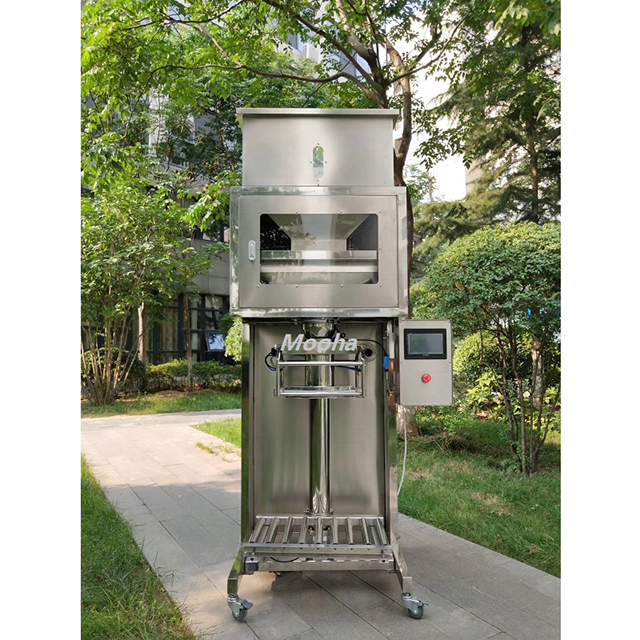
Choosing the correct system involves careful financial and technical analysis. You must look past the initial purchase price to find true value.
Calculate the financial impact of a 1% overfill on high-volume lines. Giving away extra product silently drains your profit margins. Compare typical tolerance levels directly. Volumetric cup fillers show wider volume variance. Multi-head scales routinely hit targets within fractions of a gram. A combination scale easily pays for itself simply by saving raw material.
Production schedules demand quick product swaps. Assess the unit for toolless disassembly features. Check the IP65 washdown ratings. Your team needs ease of cleaning to prevent cross-contamination between product runs. Difficult cleaning procedures waste valuable production hours. Quick-release weigh buckets significantly reduce operator downtime during shifts.
Stand-alone fillers rarely operate in isolation. Evaluate the digital handshakes between the filler and the bagging unit. The machine software must seamlessly integrate upstream. It also needs to communicate clearly downstream. Checkweighers and conveyors must sync perfectly to prevent workflow bottlenecks. Poor integration leads to constant mechanical jams.
Do not fall for unrealistic output claims. Maximum quoted cycles-per-minute (CPM) often occur at the expense of accuracy. Running a scale at top speed limits the time weigh buckets have to settle. Load cells need a fraction of a second to stabilize. You must balance acceptable operational speed against your strict precision targets.
Buyers frequently overlook physical facility constraints. Let us review the most common failure points you might encounter during installation.
Gravimetric systems require significant vertical space. Multi-head weighers mounted over baggers sit very high off the floor. They require sturdy steel mezzanines. You must measure your ceiling height carefully. Many facilities realize too late they lack the necessary vertical clearance to house the complete system.
Dropping brittle granules from excessive heights causes severe breakage. Broken pieces create fine dust. This dust can easily compromise bag seals during the thermal closing phase. Always design your discharge chutes to minimize drop distance. Implement internal baffles to slow the product descent safely.
Even solid granular products create airborne particulates. High-speed drops agitate the material violently. You must evaluate the necessity of dust extraction hoods. Proper ventilation protects machine operators. It also keeps heat-sealing jaws clean and functional over long production shifts.
Friction creates static electricity during the filling process. Plastic granules or dry environmental conditions exacerbate this issue. The product will aggressively cling to metal chutes. You will likely require anti-static treatments on all contact surfaces. Adding ionizing bars also helps neutralize the static charge efficiently.
Implementing the right granule packaging equipment transforms your daily operations. It shifts your packaging line from a constant bottleneck into a highly scalable asset. You gain predictable throughput. You establish strict inventory control. You also protect profit margins by eliminating excess material giveaway entirely.
Follow these clear shortlisting steps to ensure a successful equipment purchase:
Document your product bulk density variations accurately over multiple batches.
Map your facility layout closely. Pay special attention to overhead ceiling height and structural support.
Calculate your mathematically acceptable giveaway margins to justify gravimetric investments.
Request rigorous factory acceptance testing (FAT). Always use your actual production material for these trials.
A: A powder filler relies on auger systems. It uses a rotating vertical screw to force non-free-flowing powders down a funnel. A granule filler utilizes gravity and vibratory pans. It allows solid, free-flowing particulates to drop naturally into weighing buckets or volumetric cups.
A: Multi-head weighers provide exceptional standard deviation capabilities. They consistently hit target weights within fractions of a gram. Volumetric cup fillers measure strictly by space, not true weight. If your product density changes even slightly, cup fillers will suffer significant volume variance.
A: Generally, no. Load cell capacities and physical cup sizes have strict operational limits. A scale designed for 50-gram pouches cannot accurately dose 25-kilogram sacks. When target volume differences become this extreme, running separate dedicated packaging lines is economically necessary.
A: These machines require consistent, stable power. You will typically need a dedicated single-phase or three-phase electrical supply. They also demand clean, dry compressed air. This air actuates the pneumatic cylinders governing the hopper gates and sealing jaw mechanisms.

